Drážkovaný hriadeľ Ever-Power supplies custom spline-shaft and integrated shaft solutions for drawing-defined power-transmission interfaces. The product scope includes external spline shafts, internal spline components and gear-and-spline shafts in multiple material and heat-treatment configurations.
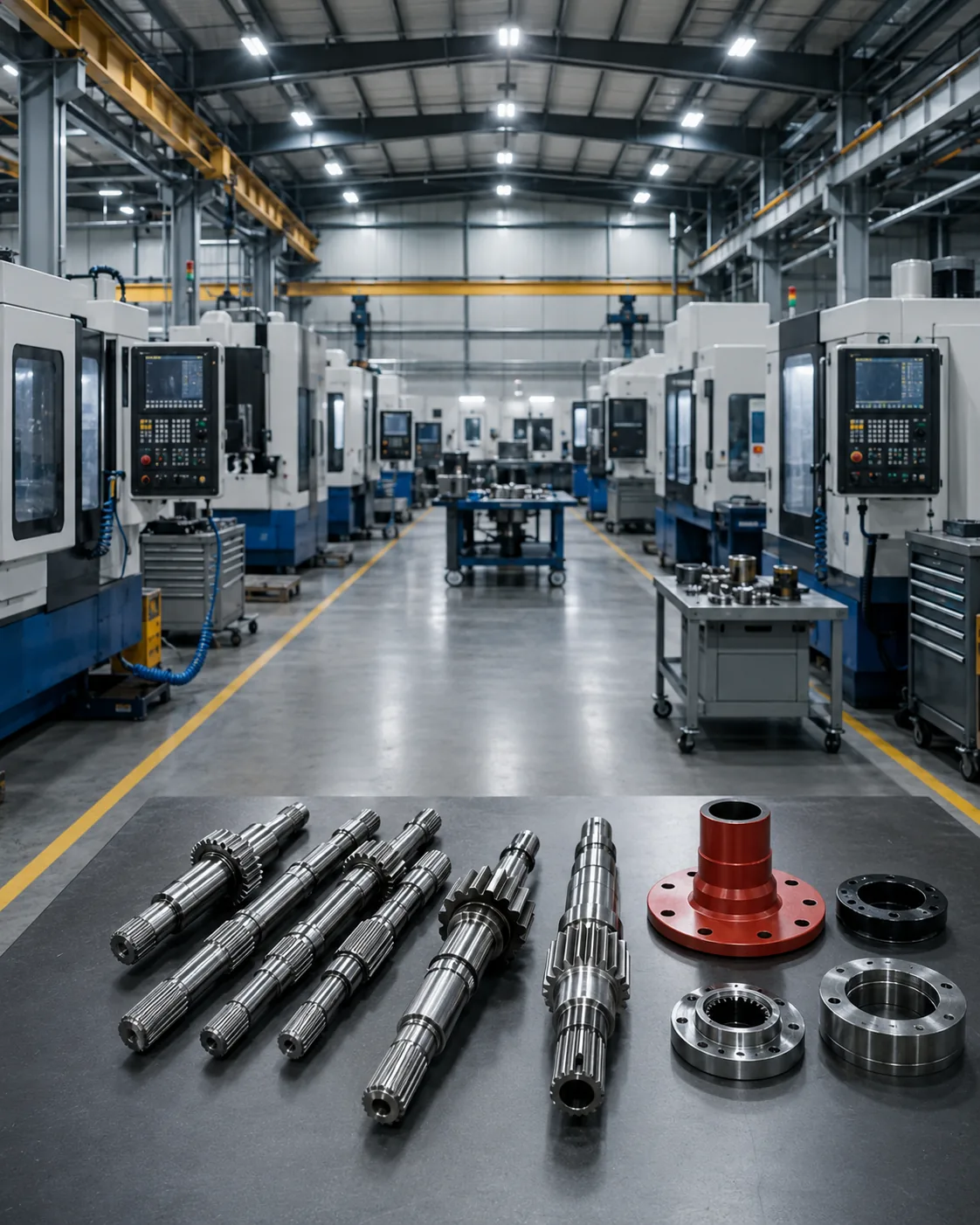
Engineering support starts with the mating interface
A spline is part of a complete connection, so technical review begins with the member it must engage and the features that locate the shaft in the assembly. Tooth geometry, effective engagement, adjacent journals, shoulders, gears and datum references are reviewed together instead of treating the spline as an isolated diameter.
For new designs, this approach helps align geometry, material condition and inspection before tooling is committed. For replacement work, the mating member and unworn reference surfaces are important because wear can change the dimensions measured from the removed shaft. A controlled drawing remains the clearest way to define the final component.
Manufacturing planning around function
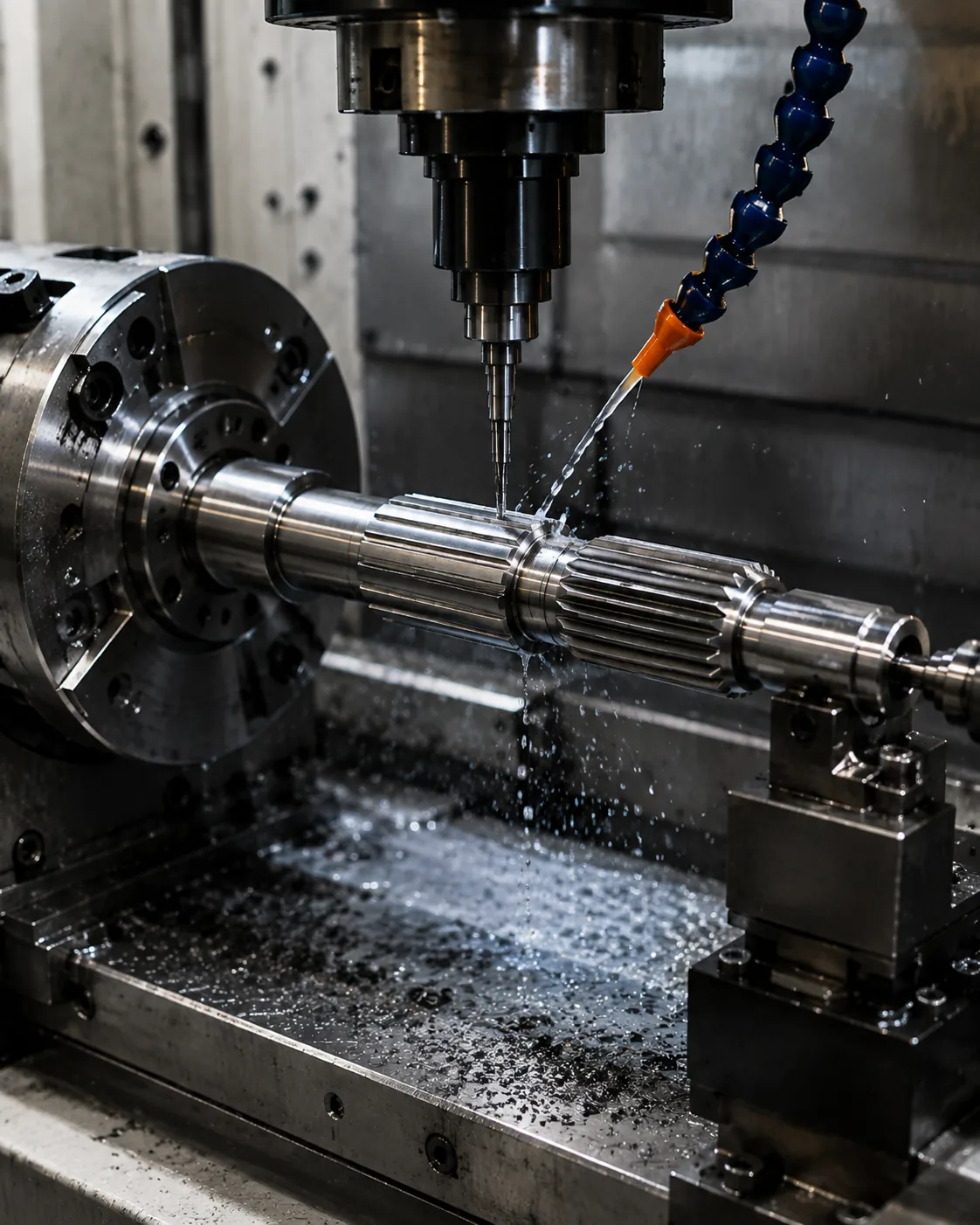
Depending on geometry and quantity, a process plan may include turning, external or internal spline cutting, heat treatment, finish machining and dimensional inspection. Tool access, shoulder location, internal bore depth and the relationship between multiple features all influence the sequence. The objective is to preserve the geometry that controls assembly while keeping the process practical and repeatable.
Heat treatment is considered as part of the manufacturing route rather than as a separate line item. Carburizing, induction hardening and quench-and-temper treatment create different material conditions and different distortion risks. When the drawing contains tight runout, journal or spline requirements, final finishing and inspection are planned at a stage that represents the finished part.
Inspection matched to the drawing
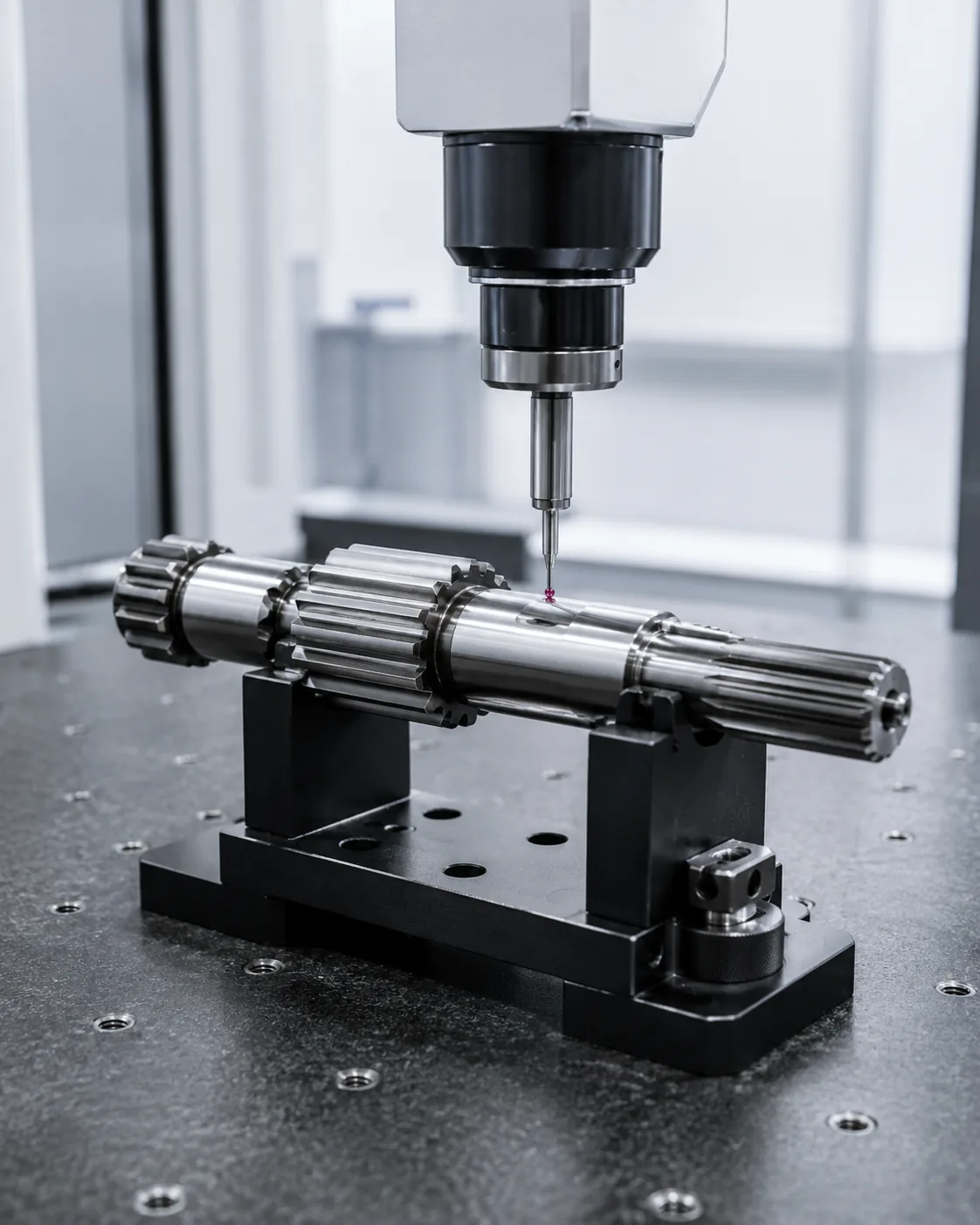
Inspection methods are selected according to the characteristic being controlled. Functional spline gaging can verify assembly behavior, while analytical tooth measurement, measurements over pins or balls, CMM inspection, runout checks, roughness measurement and hardness testing address other drawing requirements. No single method replaces all of the others.
For critical features, the datum setup and measurement method should be agreed before production so supplier and buyer interpret the drawing the same way. First-article and repeat-order reports are most useful when they identify the drawing revision and use a consistent acceptance method.
Customization workflow
Send the 2D drawing and, when useful, a neutral 3D model together with quantity and operating information. Define the mating spline, material and heat treatment, torque and speed, shock or reversing load, lubrication, temperature, axial movement and any special inspection or documentation requirement. If a complete drawing is not yet available, the engineering review can begin from the mating component and the functional information that is known.
Open technical items are turned into drawing questions before production rather than assumptions on the shop floor. This is particularly important for fit, engagement, hardness location, runout to journals or gears and internal features that can be difficult to measure after processing.
Support from prototype review to repeat orders
- Drawing and revision review
- First-article inspection planning
- Repeat-order consistency checks
- Engineering review when geometry, material or duty changes
Prototype and first-article stages are used to confirm assembly-critical dimensions and the inspection approach. When a design moves into repeat production, keeping the same revision level, datum strategy and measurement basis improves consistency between lots. If the mating component, material, heat treatment or operating duty changes, update the drawing and review the interface again.
Use the Kontrolný zoznam požiadaviek na drážkovaný hriadeľ to prepare the technical package, or contact engineering sales with your drawing and application information.