Descripción del Producto
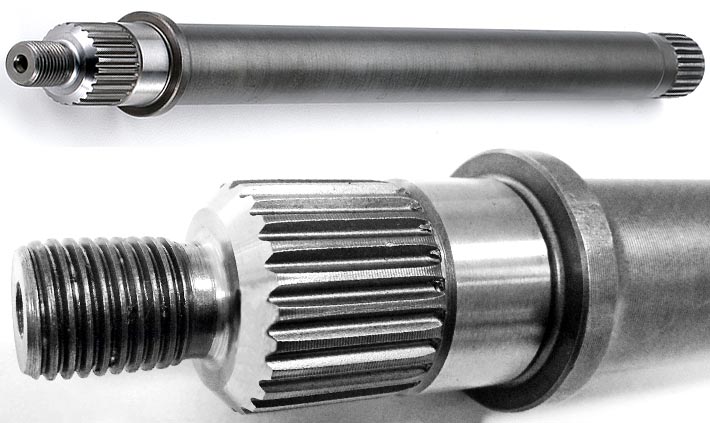
| Descripción del producto |
| Tooth trace: | Involute |
| Material: | 18Cr2Ni4WA |
| Process: | Forging+Carburizing+Grinding teeth+Shaping spline |
| Pressure angle: | Teeth parts20°,spline30° |
| Quality level: | Teeth parts AGMA 10;Spline GB3478 6 |
| Tipo: | Mn=2.5,Z=17, a=30°P; |
| Brand: | NYY |
| Origin: | Porcelana |
Machining Capability
Our Gear, Pinion Shaft, Ring Gear Capabilities:
| Capabilities of Gears/ Splines | ||||||
| Artículo | Internal Gears and Internal Splines | External Gears and External Splines | ||||
| Milled | Shaped | Ground | Hobbed | Milled | Ground | |
| Max O.D. | 2500 mm | |||||
| Min I.D.(mm) | 30 | 320 | 20 | |||
| Max Face Width(mm) | 500 | 1480 | ||||
| Max DP | 1 | 0.5 | 1 | 0.5 | ||
| Max Module(mm) | 26 | 45 | 26 | 45 | ||
| DIN Class Level | DIN Class 8 | DIN Class 4 | DIN Class 8 | DIN Class 4 | ||
| Tooth Finish | Ra 3.2 | Ra 0.6 | Ra 3.2 | Ra 0.6 | ||
| Max Helix Angle | ±22.5° | ±45° | ||||
Our Main Product Range
1. Spur Gear
2. Planetary Gear
3. Metal Gears
4. Gear Wheel
5. Ring Gear
6. Gear Shaft
7. Helical Gear
8. Pinion Shaft
9. Spline Shaft
Perfil de la empresa
1. 21 years experience in high quality gear, gear shaft’s production, sales and R&D.
2. Our Gear, Gear Shaft are certificated by ISO9001: 2008 and ISO14001: 2004.
3. CHINAMFG has more than 50 patents in high quality Gear, Gear Shaft manufacturing.
4. CHINAMFG products are exported to America, Europe.
5. Experience in cooperate with many Fortune 500 Companies
Nuestras ventajas
1) In-house capability: OEM service as per customers’ requests, with in-house tooling design & fabricating
2) Professional engineering capability: On product design, optimization and performance analysis
3) Manufacturing capability range: DIN 3960 class 8 to 4, ISO 1328 class 8 to 4, AGMA 2000 class 10-15, JIS 1702-1703 class 0 to 2, etc.
4) Packing: Tailor-made packaging method according to customer’s requirement
5) Just-in-time delivery capability
Preguntas frecuentes
1. Q: Can you make as per custom drawing?
A: Yes, we can do that.
2. Q: If I don’t have drawing, what can you do for me?
A: If you don’t have drawing, but have the sample part, you may send us. We will check if we can make it or not.
3. Q: How do you make sure the quality of your products?
A: We will do a series of inspections, such as:
A. Raw material inspection (includes chemical and physical mechanical characters inspection),
B. Machining process dimensional inspection (includes: 1st pc inspection, self inspection, final inspection),
C. Heat treatment result inspection,
D. Gear tooth inspection (to know the achieved gear quality level),
E. Magnetic particle inspection (to know if there’s any cracks in the gear).
We will provide you the reports 1 set for each batch/ shipment.
|
Costo de envío:
Coste estimado por unidad. |
Por negociar |
|---|
| Material: | Acero aleado |
|---|---|
| Carga: | Eje de transmisión |
| Rigidez y flexibilidad: | Rigidez / Eje rígido |
| Personalización: |
Disponible
| Solicitud personalizada |
|---|
How do spline shafts handle variations in torque and rotational force?
Spline shafts are designed to handle variations in torque and rotational force in mechanical systems. Here’s a detailed explanation:
1. Interlocking Splines:
Spline shafts have a series of interlocking splines along their length. These splines engage with corresponding splines on the mating component, such as gears or couplings. The interlocking design ensures a secure and robust connection, capable of transmitting torque and rotational force.
2. Distribución de carga:
When torque is applied to a spline shaft, the load is distributed across the entire engagement surface of the splines. This helps to minimize stress concentrations and prevents localized wear or failure. The load distribution capability of spline shafts allows them to handle variations in torque and rotational force effectively.
3. Material Selection:
Spline shafts are typically made from materials with high strength and durability, such as alloy steels. The material selection is crucial in handling variations in torque and rotational force. It ensures that the spline shaft can withstand the applied loads without deformation or failure.
4. Spline Profile:
The design of the spline profile also contributes to the handling of torque variations. The spline profile determines the contact area and the distribution of forces along the splines. By optimizing the spline profile, manufacturers can enhance the load-carrying capacity and improve the ability of the spline shaft to handle variations in torque.
5. Surface Finish and Lubrication:
Proper surface finish and lubrication play a crucial role in the performance of spline shafts. A smooth surface finish reduces friction and wear, while suitable lubrication minimizes heat generation and ensures smooth operation. These factors help in handling variations in torque and rotational force by reducing the impact of friction and wear on the spline engagement.
6. Consideraciones de diseño:
Engineers take several design considerations into account to ensure spline shafts can handle variations in torque and rotational force. These considerations include appropriate spline dimensions, tooth profile geometry, spline fit tolerance, and the selection of mating components. By carefully designing the spline shaft and its mating components, engineers can optimize the system’s performance and reliability.
7. Overload Protection:
In some applications, spline shafts may be equipped with overload protection mechanisms. These mechanisms, such as shear pins or torque limiters, are designed to disconnect the drive temporarily or slip when the torque exceeds a certain threshold. This protects the spline shaft and other components from damage due to excessive torque.
Overall, spline shafts handle variations in torque and rotational force through their interlocking splines, load distribution capability, appropriate material selection, optimized spline profiles, surface finish, lubrication, design considerations, and, in some cases, overload protection mechanisms. These features ensure efficient torque transmission and enable spline shafts to withstand the demands of various mechanical systems.
Can spline shafts be repaired or maintained when necessary?
Yes, spline shafts can be repaired and maintained when necessary to ensure their continued functionality and performance. Here are some ways spline shafts can be repaired and maintained:
1. Inspection and Assessment:
When an issue is suspected with a spline shaft, the first step is to conduct a thorough inspection. This involves examining the shaft for any signs of wear, damage, or misalignment. Special attention is given to the spline teeth, which may show signs of wear or deformation. Through inspection and assessment, the extent of the repair or maintenance required can be determined.
2. Spline Tooth Repair:
If the spline teeth are damaged or worn, they can be repaired or replaced. Repair methods may include re-machining the teeth to restore their original profile, filling and reshaping the worn areas using specialized welding techniques, or replacing the damaged section of the spline shaft. The specific repair method depends on the severity of the damage and the material of the spline shaft.
3. Lubrication and Cleaning:
Regular lubrication and cleaning are essential for maintaining spline shafts. Lubricants help reduce friction and wear between the mating surfaces, while cleaning removes contaminants that can affect the spline’s engagement. During maintenance, old lubricants are removed, and fresh lubricants are applied to ensure smooth operation and prevent premature failure.
4. Surface Treatment:
If the spline shaft undergoes wear or corrosion, surface treatment can be applied to restore its condition. This may involve applying coatings or treatments to enhance the hardness, wear resistance, or corrosion resistance of the spline shaft. Surface treatments can improve the longevity and performance of the spline shaft, reducing the need for frequent repairs.
5. Balancing and Alignment:
If a spline shaft is experiencing vibration or misalignment issues, it may require balancing or realignment. Balancing involves redistributing mass along the shaft to minimize vibrations, while alignment ensures proper mating and engagement with other components. Balancing and alignment procedures help optimize the performance and longevity of the spline shaft.
6. Replacement:
In cases where the spline shaft is severely damaged or worn beyond repair, replacement may be necessary. Replacement spline shafts can be sourced from manufacturers or specialized suppliers who can provide shafts that meet the required specifications and tolerances.
It’s important to note that the repair and maintenance of spline shafts should be carried out by qualified professionals with expertise in precision machining and mechanical systems. They have the knowledge and tools to properly assess, repair, or replace spline shafts, ensuring the integrity and functionality of the system in which they are used.
By implementing regular maintenance and timely repairs, spline shafts can be kept in optimal condition, extending their lifespan and maintaining their performance in various mechanical applications.
¿Qué es un eje estriado y cuál es su función principal?
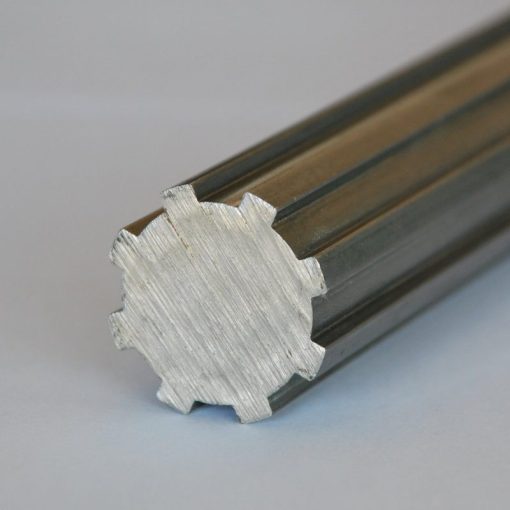
Un eje estriado es un componente mecánico que consta de una serie de ranuras o dientes (llamados estrías) mecanizados en la superficie del eje. Su función principal es transmitir el par motor, permitiendo al mismo tiempo el movimiento relativo o deslizamiento de los componentes acoplados. A continuación, se ofrece una explicación detallada:
1. Estructura y diseño:
Un eje estriado suele tener forma cilíndrica con estrías externas o internas. El eje con estrías externas tiene las estrías en la superficie exterior, mientras que el eje con estrías internas las tiene en el orificio interior. El número, el tamaño y la forma de las estrías pueden variar según la aplicación y los requisitos de diseño específicos.
2. Transmisión de par:
La función principal de un eje estriado es transmitir par entre dos componentes acoplados, como engranajes, acoplamientos u otros elementos rotativos. Las estrías del eje se acoplan con las estrías correspondientes del componente acoplado, creando un enclavamiento mecánico. Cuando se aplica par al eje estriado, el acoplamiento entre las estrías garantiza que la fuerza de rotación se transfiera del eje al componente acoplado, permitiendo así la transmisión de potencia.
3. Movimiento relativo:
A diferencia de otros tipos de ejes, un eje estriado permite el movimiento relativo o deslizamiento entre el eje y el componente acoplado. Este movimiento de deslizamiento puede ser axial (a lo largo del eje) o radial (perpendicular al eje). Las estrías proporcionan una interfaz precisa y controlada que permite este movimiento manteniendo la transmisión de par. Esta característica es particularmente útil en aplicaciones donde se requiere compensar el desplazamiento o la desalineación axial o radial.
4. Distribución de la carga:
Otra función importante de un eje estriado es distribuir uniformemente la carga aplicada a lo largo de su longitud. Las estrías crean múltiples puntos de contacto entre el eje y el componente acoplado, lo que ayuda a distribuir el par y las fuerzas axiales o radiales sobre una superficie mayor. Esta distribución de la carga minimiza las concentraciones de tensión y reduce el riesgo de desgaste prematuro o fallo.
5. Versatilidad y aplicaciones:
Los ejes estriados se utilizan en diversas industrias y sistemas, como la automotriz, la aeroespacial, la de maquinaria y la de transmisión de potencia. Son comunes en cajas de engranajes, sistemas de transmisión, tomas de fuerza, sistemas de dirección y muchos otros mecanismos rotativos donde la transmisión de par, el movimiento relativo y la distribución de carga son esenciales.
6. Consideraciones de diseño:
Al diseñar un eje estriado, es necesario considerar factores como el par de apriete, la velocidad, las cargas aplicadas y las condiciones ambientales. La geometría de las estrías, la selección del material y el acabado superficial son fundamentales para garantizar un acoplamiento adecuado, una buena capacidad de carga y la durabilidad del eje.
En resumen, un eje estriado es un componente mecánico con estrías que permite la transmisión de par a la vez que facilita el movimiento relativo o el deslizamiento entre los componentes acoplados. Su función principal es transmitir fuerza de rotación, distribuir cargas y permitir el desplazamiento axial o radial en diversas aplicaciones que requieren una transferencia de par precisa y flexibilidad.


editor by CX 2023-10-01
Convierta la guía en una solicitud de cotización (RFQ)
Envíe el plano de control, la interfaz de acoplamiento, el estado del material y la información sobre la carga útil para su revisión técnica.
Solicitar presupuesto