Produktbeschreibung
Produktbeschreibung
| Business type | Factory/manufacturer |
|
Service |
CNC machining |
| Turning and milling | |
| CNC turning | |
| OEM parts | |
|
Material |
(1) Aluminum:AL 6061-T6,6063,7075-T |
| (2)Stainless steel:303,304,316L,17-4(SUS630) | |
| (3)Steel:4140,Q235,Q345B,20#,45# | |
| (4)Titanium:TA1,TA2/GR2,TA4/GR5,TC4,TC18 | |
| (5)Brass:C36000(HPb62),C37700(HPb59),C26800(H68) | |
| (6)Copper, bronze, magnesium alloy, Delan, POM, acrylic, PC, etc. | |
| Service | OEM/ODM avaliable |
|
Finish |
Sandblasting, anodizing, Blackenning, zinc/Nickl plating, Poland |
| Powder coating, passivation PVD plating titanium, electrogalvanization | |
| Chrome plating, electrophoresis, QPQ | |
| Electrochemical polishing, chrome plating, knurling, laser etching Logo | |
| Major equipment | CNC machining center (milling machine), CNC lathe, grinding machine |
| Cylindrical grinding machine, drilling machine, laser cutting machine | |
| Graphic format | STEP, STP, GIS, CAD, PDF, DWG, DXF and other samples |
| Toleranz | +/-0.003mm |
| Oberflächenrauheit | Ra0.1~3.2 |
| Inspektion | Complete testing laboratory with micrometer, optical comparator, caliper vernier, CMM |
| Depth caliper vernier, universal protractor, clock gauge, internal Celsius gauge |
Detailed Photos
Produktparameter
| MATERIAL AVAILABLE | |||||
| Aluminum | Stainless Steel | Brass | Kupfer | Plastic | Iron |
| AL2571 | SS201 | C22000 | C15710 | POM | Q235 |
| ALA380 | SS301 | C24000 | C11000 | PEEK | Q345B |
| AL5052 | SS303 | C26000 | C12000 | PVC | 1214 / 1215 |
| AL6061 | SS304 | C28000 | C12200 | ABS | 45# |
| AL6063 | SS316 | C35600 | etc. | Nylon | 20# |
| AL6082 | SS416 | C36000 | PP | 4140 / 4130 | |
| AL7075 | etc. | C37000 | Delrin | 12L14 | |
| etc. | etc. | etc. | etc. | ||
| SURFACE TREATMENT | |||||
| Aluminum Parts | Stainless Steel Parts | Steel Parts | Brass Parts | ||
| Clear Anodized | Polishing | Zinc Plating | Nickel Plating | ||
| Color Anodized | Passivating | Oxide black | chrome plating | ||
| Sandblast Anodized | Sandblasting | Nickel Plating | Electrophoresis black | ||
| Chemical Film | Laser engraving | Powder Coated | Powder coated | ||
| Brushing | Electrophoresis black | Wärmebehandlung | Gold plating | ||
| Polishing | Oxide black | Chrome Plating | etc. | ||
| Chroming | etc | etc | |||
| etc | |||||
| TOLERANCE | |||||
| The smallest tolerance can reach +/-0.001mm or as per drawing request. | |||||
| DRAWING FORMAT | |||||
| PFD | Step | Igs | CAD | Solid | etc |
Packaging & Shipping
Unternehmensprofil
HangZhou Shinemotor Co.,Ltd located in HangZhou City, ZheJiang Province of China.
Mainly specializes in developing, manufacturing and selling all kinds of customized metal and plastic parts.
Our factory pass SGS, ISO9001/ ISO9001/ ISO14001 verification, parts can be widely used in the fields of automobile,
medical instruments, electronic communications, industrial and consumer applications and so on.
We have introduced a series of advanced and high performance production equipment imported from Japan and ZheJiang :
High precision cnc lathes, 5/6 axis cnc machining centers, plane grinding & centerless grinding machines,
stamping machines, wire cut machines, EDM and many other high-precision CNC equipment.
Our inspection equipment includes: projector, 2D, 2.5D, CMM, hardness testing machine, tool microscope, etc.
We dedicated to developing and producing kinds of brass, aluminum, steel, stainless steel
And plastic machining parts, stamping parts, and also mould design and manufacturing.
We firmly hold the concept of ” customer is the first, honesty is the basic, accrete win-win “.
Dedicated to providing you with high-quality products and excellent service!
We sincerely look CHINAMFG to creating a better future by mutually beneficial cooperation with you.
Häufig gestellte Fragen
1. Are you a factory or a trading company?
A: We are a factory which has been specialized in cnc machining & automatic manufacturing for more than 10 years.
2. Where is your factory and how can I visit it?
A: Our factory is located in HangZhou city and you can get more detailed information by browsing our website.
3. How long can I get some samples for checking and what about the price?
A: Normally samples will be done within 1-2 days (automatic machining parts) or 3-5 day (cnc machining parts).
The sample cost depends on all information (size, material, finish, etc.).
We will return the sample cost if your order quantity is good.
4. How is the warranty of the products quality control?
A: We hold the tightend quality controlling from very begining to the end and aim at 100% error free.
5.How to get an accurate quotation?
♦ Drawings, photos, detailed sizes or samples of products.
♦ Material of products.
♦ Ordinary purchasing quantity.
♦ Quotation within 1~6 hours
| Material: | Kohlenstoffstahl |
|---|---|
| Laden: | Antriebswelle |
| Stiffness & Flexibility: | Stiffness / Rigid Axle |
| Proben: |
US$ 100/Piece
1 Stück (Mindestbestellmenge) | Order Sample |
|---|
| Anpassung: |
Verfügbar
| Kundenspezifische Anfrage |
|---|
.shipping-cost-tm .tm-status-off{background: none;padding:0;color: #1470cc}
|
Versandkosten:
Geschätzte Frachtkosten pro Einheit. |
über Versandkosten und voraussichtliche Lieferzeit. |
|---|
| Zahlungsmethode: |
|
|---|---|
|
Erste Zahlung Vollständige Zahlung |
| Währung: | US$ |
|---|
| Rückgabe & Erstattung: | Sie können bis zu 30 Tage nach Erhalt der Produkte eine Rückerstattung beantragen. |
|---|
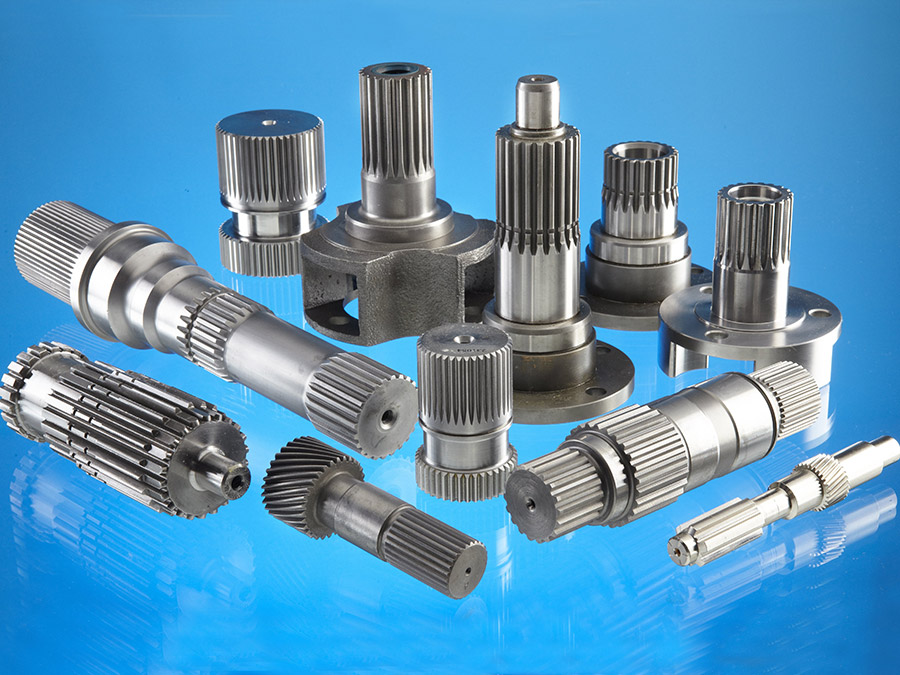
Können Keilwellen sowohl in mobilen als auch in stationären Maschinen eingesetzt werden?
Ja, Keilwellen können sowohl in mobilen als auch in stationären Maschinen eingesetzt werden. Hier eine detaillierte Erklärung:
1. Mobile Maschinen:
Keilwellen finden in verschiedenen Arten von mobilen Maschinen breite Anwendung. Zum Beispiel:
- In der Automobilindustrie: Keilwellen werden häufig in Antriebssträngen von Kraftfahrzeugen eingesetzt, wo sie das Drehmoment vom Motor auf die Räder übertragen. Sie finden sich in Bauteilen wie Getriebe, Differential und Achswellen.
- Im Bauwesen und bei Erdbewegungsmaschinen: Keilwellen werden in Baumaschinen wie Baggern, Ladern und Planierraupen eingesetzt. Sie dienen in den Antriebssystemen zur Drehmomentübertragung und zum Antrieb der Hydraulikpumpen oder zur Fortbewegung der Maschine.
- In der Landwirtschaft: Keilwellen werden in Landmaschinen wie Traktoren, Mähdreschern und Erntemaschinen eingesetzt. Sie dienen der Kraftübertragung vom Motor auf verschiedene angetriebene Komponenten, wie beispielsweise die Räder, die Zapfwelle (PTO) oder Hydrauliksysteme.
- Bei Geländefahrzeugen: Keilwellen kommen in Geländefahrzeugen wie ATVs (All-Terrain-Vehicles) und Militärfahrzeugen zum Einsatz. Sie ermöglichen die Kraftübertragung auf die Räder oder Antriebskomponenten und gewährleisten so Mobilität und Leistungsfähigkeit in anspruchsvollem Gelände.
2. Stationäre Maschinen:
Keilwellen finden auch in stationären Maschinen verschiedenster Branchen breite Anwendung. Einige Beispiele hierfür sind:
- In Werkzeugmaschinen: Keilwellen werden in Werkzeugmaschinen wie Dreh-, Fräs- und Schleifmaschinen eingesetzt. Sie übertragen das Drehmoment in der Spindel oder im Gewindetrieb und ermöglichen so eine präzise Bewegungssteuerung und Materialabtragung.
- In Industriegetrieben spielen Keilwellen eine entscheidende Rolle. Sie übertragen das Drehmoment zwischen Eingangs- und Ausgangswelle und ermöglichen so die je nach Anwendung erforderliche Drehzahlreduzierung oder -erhöhung.
- In der Energieerzeugung: Keilwellen werden in Energieerzeugungsanlagen, einschließlich Turbinen und Generatoren, eingesetzt. Sie helfen, das Drehmoment zwischen dem rotierenden Rotor und den stationären Komponenten zu übertragen und so die Energieumwandlung zu ermöglichen.
- In Pumpen- und Kompressorsystemen: Keilwellen kommen in Pumpen und Kompressoren verschiedener Branchen zum Einsatz. Sie übertragen das Drehmoment vom Motor bzw. der Antriebsmaschine auf das Laufrad bzw. die Kompressorelemente und ermöglichen so den Flüssigkeits- oder Gastransport.
Die Vielseitigkeit von Keilwellen macht sie für ein breites Anwendungsspektrum geeignet, sowohl mobil als auch stationär. Ihre Fähigkeit, Drehmomente effizient zu übertragen, Fluchtungsfehler auszugleichen, Lasten zu verteilen und zuverlässige Verbindungen herzustellen, macht sie zur bevorzugten Wahl in unterschiedlichsten Maschinen verschiedener Branchen.
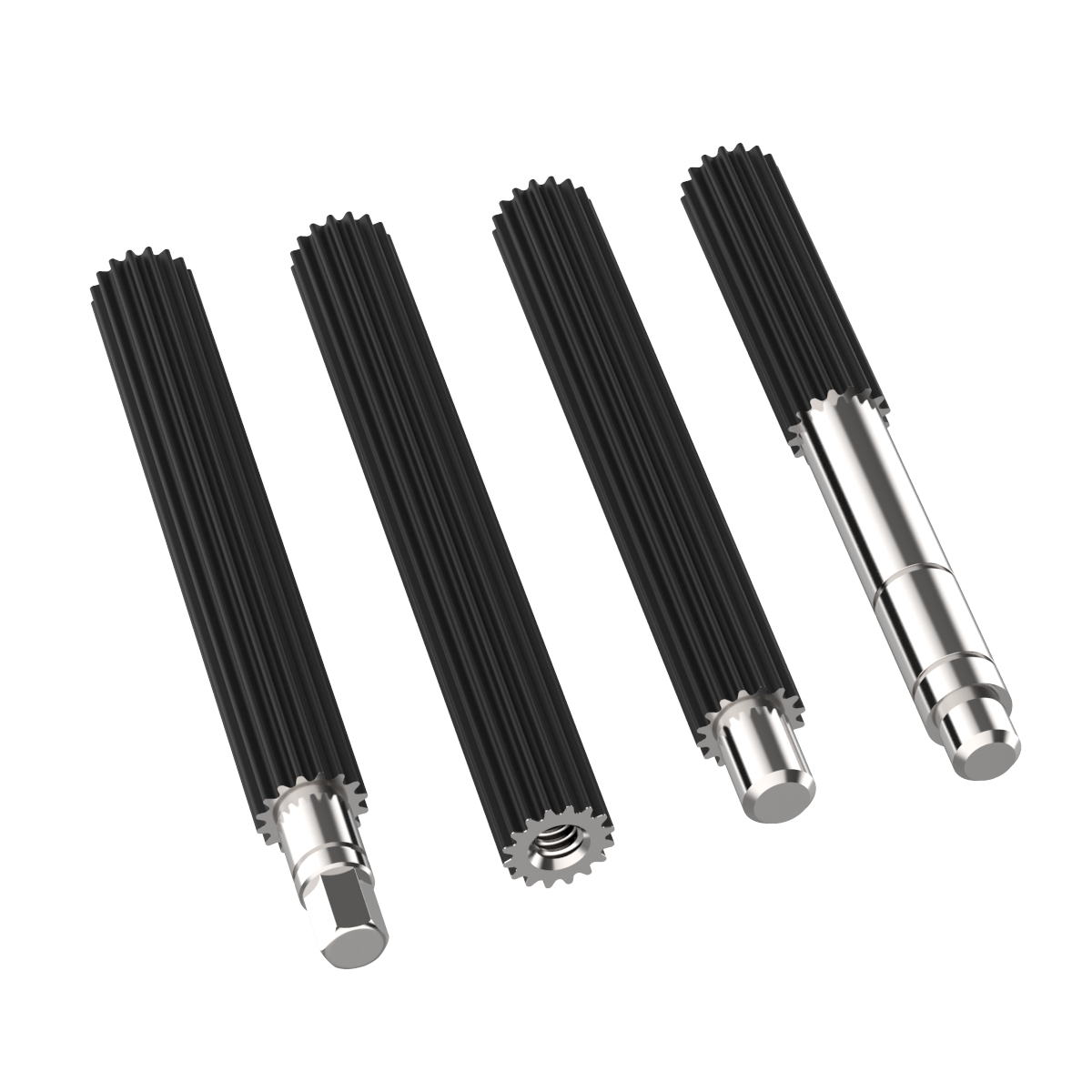
How do spline shafts contribute to precise and consistent rotation?
Spline shafts play a crucial role in achieving precise and consistent rotation in mechanical systems. Here’s how spline shafts contribute to these characteristics:
1. Interlocking Design:
Spline shafts feature a series of ridges or teeth, known as splines, that interlock with corresponding grooves or slots in mating components. This interlocking design ensures a positive connection between the shaft and the mating part, allowing for precise and consistent rotation. The engagement between the splines provides resistance to axial and radial movement, minimizing play or backlash that can introduce inaccuracies in rotation.
2. Lastverteilung:
The interlocking engagement of spline shafts allows for effective load distribution along the length of the shaft. This helps distribute the applied torque evenly, reducing stress concentrations and minimizing the risk of localized deformation or failure. By distributing the load, spline shafts contribute to consistent rotation and prevent excessive wear on specific areas of the shaft or the mating components.
3. Torque Transmission:
Spline shafts are specifically designed to transmit torque efficiently from one component to another. The close fit between the splines ensures a high torque-carrying capacity, enabling the shaft to transfer rotational force without significant power loss. This efficient torque transmission contributes to precise and consistent rotation, allowing for accurate positioning and motion control in various applications.
4. Rigidity and Stiffness:
Spline shafts are typically constructed from materials with high rigidity and stiffness, such as steel or alloy. This inherent rigidity helps maintain the dimensional integrity of the shaft and minimizes deflection or bending under load. By providing a stable and stiff rotational axis, spline shafts contribute to precise and consistent rotation, particularly in applications that require tight tolerances or high-speed operation.
5. Alignment and Centering:
The interlocking nature of spline shafts aids in the alignment and centering of rotating components. The splines ensure proper positioning and orientation of the shaft relative to the mating part, facilitating concentric rotation. This alignment helps prevent wobbling, vibrations, and eccentricity, which can adversely affect rotation accuracy and consistency.
6. Lubrication and Wear Reduction:
Proper lubrication of spline shafts is essential for maintaining precise and consistent rotation. Lubricants reduce friction between the mating surfaces, minimizing wear and preventing stick-slip phenomena that can cause irregular rotation. The use of lubrication also helps dissipate heat generated during operation, ensuring optimal performance and longevity of the spline shaft.
By incorporating interlocking design, load distribution, efficient torque transmission, rigidity, alignment, and lubrication, spline shafts contribute to precise and consistent rotation in mechanical systems. Their reliable and accurate rotational characteristics make them suitable for a wide range of applications, from automotive and aerospace to machinery and robotics.
What are the advantages of using spline shafts in mechanical systems?
Using spline shafts in mechanical systems offers several advantages. Here’s a detailed explanation:
1. Drehmomentübertragung:
Spline shafts provide efficient torque transmission between the driving and driven components. The interlocking splines ensure a secure and reliable transfer of rotational force, enabling the transmission of power and motion in mechanical systems.
2. Relative Movement Accommodation:
Spline shafts can accommodate relative movement between the driving and driven components. They allow axial, radial, and angular displacements, compensating for misalignments, thermal expansion, and vibrations. This flexibility helps to maintain proper engagement and minimize stress concentrations.
3. Load Distribution:
The splines on the shaft distribute the transmitted load across the entire engagement surface. This helps to reduce localized stresses and prevents premature wear or failure of the components. The load distribution capability of spline shafts contributes to the overall durability and longevity of the mechanical system.
4. Precise Positioning and Control:
Spline shafts enable precise positioning and control of mechanical components. The splines provide accurate rotational alignment, allowing for precise angular positioning and indexing. This is crucial in applications where precise control and synchronization of movements are required.
5. Interchangeability and Standardization:
Spline shafts are available in standardized designs and dimensions. This enables interchangeability between components and facilitates easier maintenance and replacement. Standardization also simplifies the design and manufacturing processes, reducing costs and lead times.
6. High Power Transmission Capacity:
Spline shafts are designed to withstand high torque loads. The interlocking splines provide a large contact area, distributing the transmitted torque across multiple teeth. This allows spline shafts to handle higher power transmission requirements, making them suitable for heavy-duty applications.
7. Versatility:
Spline shafts can be designed and manufactured to suit various application requirements. They can be customized in terms of size, shape, number of splines, and spline profile to match the specific needs of a mechanical system. This versatility makes spline shafts adaptable to a wide range of industries and applications.
8. Reduced Slippage and Backlash:
When properly designed and manufactured, spline shafts exhibit minimal slippage and backlash. The tight fit between the splines prevents significant axial or radial movement during torque transmission, resulting in improved efficiency and precision in mechanical systems.
In summary, the advantages of using spline shafts in mechanical systems include efficient torque transmission, accommodation of relative movement, load distribution, precise positioning and control, interchangeability, high power transmission capacity, versatility, and reduced slippage and backlash. These advantages make spline shafts a reliable and effective choice in various applications where power transfer, flexibility, and precise motion control are essential.


editor by CX 2023-10-30
Wandeln Sie den Leitfaden in eine Angebotsanfrage um.
Senden Sie die kontrollierte Zeichnung, die Angaben zur Verbindungsschnittstelle, zum Materialzustand und zur Verwendungsart zur technischen Prüfung.
Angebot anfordern