Toote kirjeldus
HangZhou Manufacturer Professional supplier high tolerance precision CNC machining Stainless Steel rod Spline Shaft
———————————————————-
19 years industry experience
11 years in Euro-market, been serving Top 10 companies in the Railway and gym equipments industry.
———————————————————————————————————————————————————————————–
Muyang machinery is a manufacturer with the capability of comprehensive services of casting, forging and machining, committed to the production of customized parts. Since established in 2002 (former Miaosen Machinery Co., Ltd), we’ve been supplying to the global market for over 15 years, served industries include automotive, railway, gas and oil, medical machinery, construction machinery, gym equipment, etc.
|
Võimekus |
CNC machining center – MAX size: 600*1200*500mm General tolerance: ±0.005mm Machine qty: 6 sets CNC Milling – MAX size: 1200*500mm General tolerance: ±0.02mm Machine qty: 12 sets CNC turning – MAX size: φ0.5-φ800*1000mm General tolerance: ±0.005mm Machine qty: 35 sets |
|
Service: |
CNC turning, CNC milling, CNC grinding, CNC lathe machining, CNC boring, CNC drilling, CNC tapping, surface treatment etc. |
|
Material available |
Stainless steel: SS201, SSS301, SS303, SS304, SS316, SS416, SS440C etc. Steel: Mild steel, Carbon steel, 4140, 4340, Q235, Q345B, 20#, 45# Brass/Bronze: HPb63, HPb62, HPb61, HPb59, H59, H68, H80, H90, C360, C260, C932 Copper: C11000, C12000, C36000 Aluminum: AL2017, AL2571, AL5052, AL5083, AL6061, AL6063, AL6082, AL7075 Iron: A36, 45#, 1213, 1214, 1215 Others per customers’ requirements |
|
Pinna viimistlus |
Aluminum alloy: Clear anodized, color anodized, sand blast anodized, hard anodized, brushing, polishing, powder coated and painting Brass/copper/steel: Nickel plating, chrome plating Steel/Stainless steel: Zinc plating, oxide black, carburized, heat treatment, nitriding |
|
Measuring tools |
Micrometer, calipers, thread tools, high guage, trapezoidal thread plug gauge, sclerometer, dial indicator, projector |
Related Services
Pakendamine ja saatmine
We promise our clients careful, safe and tight package for exporting!
Standard packing: pearl cotton/bubble bag + carton box + pallet/wooden box
Special packing: custom packaging + wooden box
KKK
1. Are you a manufacturer or trading company?
We’re a manufacturer with self-export rights.
2. What’s your main business?
Our main business is custom metal parts processed by CNC machining, casting, forging etc., served industries including railway, automobile, construction machinery, gym equipment, water gas and oil.
3. Directly get to CONTACT or send your product drawing/inquiries to email, we will reply within 0.5 hour.
| Rakendus: | Fastener, Auto and Motorcycle Accessory, Hardware Tool, Machinery Accessory |
|---|---|
| Standard: | GB, EN, API650, China GB Code, JIS Code, TEMA, ASME |
| Pinnatöötlus: | Sand Blast/Powder Coating/Electroplating/Polishing |
| Production Type: | Mass Production |
| Machining Method: | CNC Machining |
| Materjal: | Steel, Brass, Alloy, Copper, Aluminum, Iron |
| Kohandamine: |
Saadaval
| Kohandatud päring |
|---|
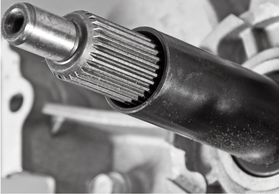
Kuidas aitavad hammasvõllid kaasa tõhusale jõuülekandele?
Nuutvõllid mängivad olulist rolli tõhusa jõuülekande võimaldamisel erinevates mehaanilistes süsteemides. Siin on üksikasjalik selgitus selle kohta, kuidas nuutvõllid aitavad kaasa tõhusale jõuülekandele:
1. Pöördemomendi ülekanne:
Hammasvõllid on konstrueeritud pöördemomendi edastamiseks ühelt komponendilt teisele. Need pakuvad positiivset ja libisemiskindlat ühendust, mis võimaldab tõhusat jõuülekannet ilma libisemise või energiakadudeta. Võlli hammasrattad haakuvad vastava komponendi hammasratastega, luues tugeva mehaanilise ühenduse pöördemomendi ülekandeks.
2. Koormuse jaotus:
Hammasvõllid jaotavad rakendatud koormuse ühtlaselt kogu haardepinnale. Võlli hammasprofiilil olevad hambad või sooned tagavad koormuse jaotumise mitme kokkupuutepunkti vahel. See ühtlane koormuse jaotus aitab vältida lokaalset pingekontsentratsiooni ja vähendab enneaegse kulumise või rikke ohtu. Tõhus koormuse jaotus tagab sujuva ja usaldusväärse jõuülekande.
3. Joonduse kõrvalekallete kompenseerimine:
Nuutvõllid suudavad teatud määral tasandada vastastikuste komponentide vahelist joondushälvet. Nuutprofiili disain võimaldab nurk- või paralleeljoondust, ilma et see kahjustaks jõuülekande võimet. See joondushälbe kompenseerimisvõime on ülioluline tõhusa jõuülekande säilitamiseks olukordades, kus täiuslik joondus on keeruline või varieerub.
4. Suur pöördemoment:
Nuutvõllid on konstrueeritud taluma suuri pöördemomente. Nuutprofiil, haardepikkus ja materjalivalik on optimeeritud eeldatava pöördemomendi nõuete täitmiseks. See suur pöördemomendi maht tagab, et võll suudab normaalsetes töötingimustes tõhusalt jõudu edastada ilma liigse läbipainde või rikketa.
5. Väändejäikus:
Hammasvõllidel on suur väändjäikus, mis tähendab, et nad peavad pöördemomendi mõjul vastu väändumisele või väändepaindumisele. Võlli konstruktsioon, sealhulgas selle läbimõõt, hammasprofiil ja materjali omadused, aitavad kaasa selle väändjäikusele. Suur väändjäikus minimeerib võlli deformatsioonist või paindumisest tingitud võimsuskadu, võimaldades tõhusat jõuülekannet.
6. Usaldusväärne ühendus:
Nuutvõllid pakuvad usaldusväärset ja korduvat ühendust ajami ja veetava komponendi vahel. Kui nuutvõll on korralikult ühendatud, säilitab see ühenduse, tagades aja jooksul ühtlase jõuülekande. See töökindlus on ülioluline efektiivsuse säilitamiseks ja võimsuse kadumise või katkestuste vältimiseks töö ajal.
7. Minimaalne tagasilöök:
Lõtk viitab väikesele pöörlemislõtkule või kliirensile vastastikuste komponentide vahel. Nõuetekohaselt projekteeritud ja valmistatud hammasvõllid võivad minimeerida jõuülekandesüsteemi lõtku. Väiksem lõtk tagab sujuvama töö, parema täpsuse ja efektiivsuse, minimeerides tagurdamise või suuna muutmisega seotud võimsuskadusid.
8. Kompaktne disain:
Spline-võllid pakuvad kompaktset ja ruumisäästlikku lahendust jõuülekandeks. Nende disain võimaldab suhteliselt väikest jalajälge, pakkudes samal ajal tugevat pöördemomendi ülekandevõimet. Kompaktne disain on eriti kasulik rakendustes, kus ruum on piiratud, näiteks autode jõuülekannetes või kompaktsetes masinates.
Nuutvõllide lisamisega mehaanilistesse süsteemidesse saavad insenerid saavutada tõhusa jõuülekande, tagades, et võimsus kantakse tõhusalt ajamilt ajamitele. Nuutvõllide ainulaadsed konstruktsioonilised omadused võimaldavad usaldusväärset pöördemomendi ülekannet, ühtlast koormuse jaotumist, joondusvea kompenseerimist, suurt pöördemomendi mahtu, väändjäikust, usaldusväärseid ühendusi, minimaalset lõtku ja kompaktsust.
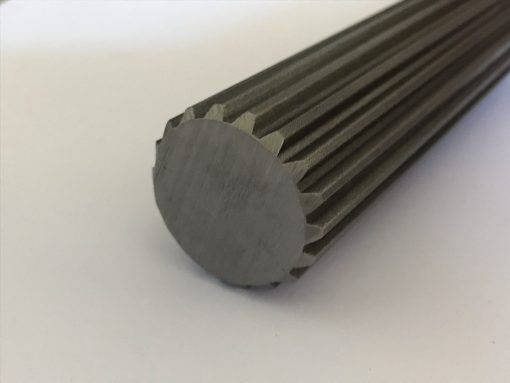
What materials are commonly used in the construction of spline shafts?
Various materials are commonly used in the construction of spline shafts, depending on the specific application requirements. Here’s a list of commonly used materials:
1. Steel:
Steel is one of the most widely used materials for spline shafts. Different grades of steel, such as carbon steel, alloy steel, or stainless steel, can be employed based on factors like strength, hardness, and corrosion resistance. Steel offers excellent mechanical properties, including high strength, durability, and wear resistance, making it suitable for a broad range of applications.
2. Alloy Steel:
Alloy steel is a type of steel that contains additional alloying elements, such as chromium, molybdenum, or nickel. These alloying elements enhance the mechanical properties of the steel, providing improved strength, toughness, and wear resistance. Alloy steel spline shafts are commonly used in applications that require high torque capacity, durability, and resistance to fatigue.
3. Stainless Steel:
Stainless steel is known for its corrosion resistance properties, making it suitable for applications where the spline shaft is exposed to moisture or corrosive environments. Stainless steel spline shafts are commonly used in industries such as food processing, chemical processing, marine, and medical equipment.
4. Aluminum:
Aluminum is a lightweight material with good strength-to-weight ratio. It is often used in applications where weight reduction is a priority, such as automotive and aerospace industries. Aluminum spline shafts can provide advantages such as decreased rotating mass and improved fuel efficiency.
5. Titanium:
Titanium is a strong and lightweight material with excellent corrosion resistance. It is commonly used in high-performance applications where weight reduction, strength, and corrosion resistance are critical factors. Titanium spline shafts find applications in aerospace, motorsports, and high-end industrial equipment.
6. Brass:
Brass is an alloy of copper and zinc, offering good machinability and corrosion resistance. It is often used in applications that require electrical conductivity or a non-magnetic property. Brass spline shafts can be found in industries such as electronics, telecommunications, and instrumentation.
7. Plastics and Composite Materials:
In certain applications where weight reduction, corrosion resistance, or noise reduction is important, plastics or composite materials can be used for spline shafts. Materials such as nylon, acetal, or fiber-reinforced composites can provide specific advantages in terms of weight, low friction, and resistance to chemicals.
It’s important to note that material selection for spline shafts depends on factors such as load requirements, environmental conditions, operating temperatures, and cost considerations. Engineers and designers evaluate these factors to determine the most suitable material for a given application.
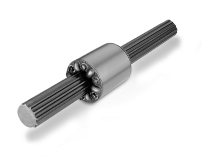
What are the advantages of using spline shafts in mechanical systems?
Using spline shafts in mechanical systems offers several advantages. Here’s a detailed explanation:
1. Pöördemomendi ülekanne:
Spline shafts provide efficient torque transmission between the driving and driven components. The interlocking splines ensure a secure and reliable transfer of rotational force, enabling the transmission of power and motion in mechanical systems.
2. Relative Movement Accommodation:
Spline shafts can accommodate relative movement between the driving and driven components. They allow axial, radial, and angular displacements, compensating for misalignments, thermal expansion, and vibrations. This flexibility helps to maintain proper engagement and minimize stress concentrations.
3. Load Distribution:
The splines on the shaft distribute the transmitted load across the entire engagement surface. This helps to reduce localized stresses and prevents premature wear or failure of the components. The load distribution capability of spline shafts contributes to the overall durability and longevity of the mechanical system.
4. Precise Positioning and Control:
Spline shafts enable precise positioning and control of mechanical components. The splines provide accurate rotational alignment, allowing for precise angular positioning and indexing. This is crucial in applications where precise control and synchronization of movements are required.
5. Interchangeability and Standardization:
Spline shafts are available in standardized designs and dimensions. This enables interchangeability between components and facilitates easier maintenance and replacement. Standardization also simplifies the design and manufacturing processes, reducing costs and lead times.
6. High Power Transmission Capacity:
Spline shafts are designed to withstand high torque loads. The interlocking splines provide a large contact area, distributing the transmitted torque across multiple teeth. This allows spline shafts to handle higher power transmission requirements, making them suitable for heavy-duty applications.
7. Versatility:
Spline shafts can be designed and manufactured to suit various application requirements. They can be customized in terms of size, shape, number of splines, and spline profile to match the specific needs of a mechanical system. This versatility makes spline shafts adaptable to a wide range of industries and applications.
8. Reduced Slippage and Backlash:
When properly designed and manufactured, spline shafts exhibit minimal slippage and backlash. The tight fit between the splines prevents significant axial or radial movement during torque transmission, resulting in improved efficiency and precision in mechanical systems.
In summary, the advantages of using spline shafts in mechanical systems include efficient torque transmission, accommodation of relative movement, load distribution, precise positioning and control, interchangeability, high power transmission capacity, versatility, and reduced slippage and backlash. These advantages make spline shafts a reliable and effective choice in various applications where power transfer, flexibility, and precise motion control are essential.


editor by CX 2023-09-26
Muuda juhend hinnapäringuks
Saatke kontrollitud joonis, ühendusliides, materjali seisukord ja tööandmed tehniliseks ülevaatuseks.
Küsi pakkumist