Descrizione del prodotto
You can kindly find the specification details below:
HangZhou Mastery Machinery Technology Co., LTD helps manufacturers and brands fulfill their machinery parts by precision manufacturing. High precision machinery products like the shaft, worm screw, bushing, couplings, joints……Our products are used widely in electronic motors, the main shaft of the engine, the transmission shaft in the gearbox, couplers, printers, pumps, drones, and so on. They cater to different industries, including automotive, industrial, power tools, garden tools, healthcare, smart home, etc.
Mastery caters to the industrial industry by offering high-level Cardan shafts, pump shafts, and a bushing that come in different sizes ranging from diameter 3mm-50mm. Our products are specifically formulated for transmissions, robots, gearboxes, industrial fans, and drones, etc.
Mastery factory currently has more than 100 main production equipment such as CNC lathe, CNC machining center, CAM Automatic Lathe, grinding machine, hobbing machine, etc. The production capacity can be up to 5-micron mechanical tolerance accuracy, automatic wiring machine processing range covering 3mm-50mm diameter bar.
Key Specifications:
| Nome | Albero/Albero motore/Albero di trasmissione/Albero ingranaggi/Albero pompa/Vite senza fine/Ingranaggio a vite senza fine/Boccola/Anello/Giunto/Perno |
| Materiale | 40Cr/35C/GB45/70Cr/40CrMo |
| Processo | Lavorazione meccanica/Tornitura/Fresatura/Foratura/Rettifica/Lucidatura |
| Misurare | 2-400 mm (personalizzabile) |
| Diametro | φ5.5(Customized) |
| Tolleranza del diametro | 0,01 mm |
| Rotondità | 0.003mm |
| Rugosità | Ra0.4 |
| Rettilineità | 0.008mm |
| Durezza | HRC45-50 |
| Lunghezza | 60mm(Customized) |
| Trattamento termico | Personalizzato |
| Trattamento superficiale | Rivestimento/Nicolatura/Zincatura/QPQ/Carbonizzazione/Tempra/Trattamento nero/Trattamento a vapore/Nitrocarburazione/Carbonitrizione |
Quality Management:
- Raw Material Quality Control: Chemical Composition Analysis, Mechanical Performance Test, ROHS, and Mechanical Dimension Check
- Production Process Quality Control: Full-size inspection for the 1st part, Critical size process inspection, SPC process monitoring
- Lab ability: CMM, OGP, XRF, Roughness meter, Profiler, Automatic optical inspector
- Quality system: ISO9001, IATF 16949, ISO14001
- Eco-Friendly: ROHS, Reach.
Packaging and Shipping:
Throughout the entire process of our supply chain management, consistent on-time delivery is vital and very important for the success of our business.
Mastery utilizes several different shipping methods that are detailed below:
For Samples/Small Q’ty: By Express Services or Air Fright.
For Formal Order: By Sea or by air according to your requirement.
Mastery Services:
- One-Stop solution from idea to product/ODM&OEM acceptable
- Individual research and sourcing/purchasing tasks
- Individual supplier management/development, on-site quality check projects
- Muti-varieties/small batch/customization/trial orders are acceptable
- Flexibility on quantity/Quick samples
- Forecast and raw material preparation in advance are negotiable
- Quick quotes and quick responses
General Parameters:
If you are looking for a reliable machinery product partner, you can rely on Mastery. Work with us and let us help you grow your business using our customizable and affordable products.
| Materiale: | acciaio al carbonio |
|---|---|
| Carico: | Albero di trasmissione |
| Rigidità e flessibilità: | Rigidità / Assale rigido |
| Precisione dimensionale del diametro del perno: | IT6-IT9 |
| Forma dell'asse: | Albero dritto |
| Forma dell'albero: | Asse reale |
| Personalizzazione: |
Disponibile
| Richiesta personalizzata |
|---|

In che modo la progettazione di un albero scanalato influisce sulle sue prestazioni?
La progettazione di un albero scanalato gioca un ruolo cruciale nel determinarne le caratteristiche prestazionali. Ecco una spiegazione dettagliata:
1. Trasmissione della coppia:
La progettazione dell'albero scanalato influisce direttamente sulla sua capacità di trasmettere la coppia in modo efficiente. Fattori come il profilo della scanalatura, il numero di scanalature e la lunghezza di innesto influenzano la capacità di trasmissione della coppia dell'albero. Un profilo della scanalatura ben progettato con dimensioni ottimizzate garantisce la massima area di contatto e una distribuzione del carico ottimale, con conseguente miglioramento della trasmissione della coppia.
2. Distribuzione del carico:
Un albero scanalato progettato correttamente distribuisce il carico applicato in modo uniforme sulle superfici di contatto. Ciò contribuisce a minimizzare le concentrazioni di stress e a prevenire usura localizzata o rotture. La progettazione deve tenere conto di fattori quali la geometria del profilo scanalato, la forma del dente e la finitura superficiale per ottenere una distribuzione ottimale del carico e migliorare le prestazioni complessive dell'albero.
3. Compensazione del disallineamento:
Gli alberi scanalati possono tollerare un certo grado di disallineamento tra i componenti accoppiati. La progettazione del profilo scanalato può includere caratteristiche che consentono disallineamenti angolari o paralleli, garantendo un'efficace trasmissione di potenza anche in condizioni di disallineamento. Una corretta progettazione contribuisce a mantenere un funzionamento regolare e a prevenire sollecitazioni eccessive o guasti prematuri.
4. Rigidità torsionale:
Il design dell'albero scanalato influenza la sua rigidità torsionale, ovvero la resistenza alla torsione sotto l'azione di una coppia. Un albero più rigido riduce la flessione torsionale, migliora la risposta alla coppia e ottimizza le prestazioni complessive del sistema. Il materiale dell'albero, il diametro e il profilo della scanalatura contribuiscono tutti al raggiungimento della rigidità torsionale desiderata.
5. Resistenza alla fatica:
Nella progettazione dell'albero scanalato è necessario considerare la resistenza alla fatica per garantire una lunga durata. La rottura per fatica può verificarsi a causa di carichi ripetuti o ciclici. Pratiche di progettazione adeguate, come l'ottimizzazione del profilo scanalato, la selezione di materiali appropriati e l'applicazione di trattamenti superficiali idonei, possono migliorare la resistenza alla fatica dell'albero e prolungarne la durata.
6. Finitura superficiale e lubrificazione:
La finitura superficiale dell'albero scanalato e il tipo di lubrificazione utilizzato influiscono significativamente sulle sue prestazioni. Una superficie liscia riduce l'attrito, l'usura e il rischio di corrosione. Una lubrificazione adeguata garantisce la formazione di un film lubrificante sufficiente, riduce la generazione di calore e minimizza l'usura. La progettazione dovrebbe tenere conto dei requisiti di finitura superficiale e delle disposizioni relative alla lubrificazione per ottimizzare le prestazioni dell'albero.
7. Considerazioni ambientali:
La progettazione deve tenere conto delle specifiche condizioni ambientali in cui l'albero scanalato opererà. Fattori come temperatura, umidità, esposizione a sostanze chimiche o particelle abrasive possono influenzare le prestazioni e la durata dell'albero. La selezione di materiali adeguati, i trattamenti superficiali e i meccanismi di tenuta possono essere integrati nella progettazione per resistere alle sfide ambientali.
8. Fattibilità produttiva:
Nella progettazione dell'albero scanalato è necessario considerare anche la fattibilità produttiva e il rapporto costi-benefici. I progetti complessi possono risultare difficili da realizzare o richiedere processi produttivi specializzati, con conseguente aumento dei costi di produzione. Trovare un equilibrio tra la complessità del progetto e la fattibilità produttiva è fondamentale per garantire un processo di produzione pratico ed efficiente.
Considerando questi fattori di progettazione, gli ingegneri possono ottimizzare le prestazioni degli alberi scanalati, ottenendo una migliore trasmissione della coppia, una distribuzione del carico più efficace, la compensazione del disallineamento, la rigidità torsionale, la resistenza alla fatica, la finitura superficiale e la compatibilità ambientale. Un albero scanalato ben progettato contribuisce all'efficienza complessiva, all'affidabilità e alla longevità del sistema meccanico in cui viene utilizzato.
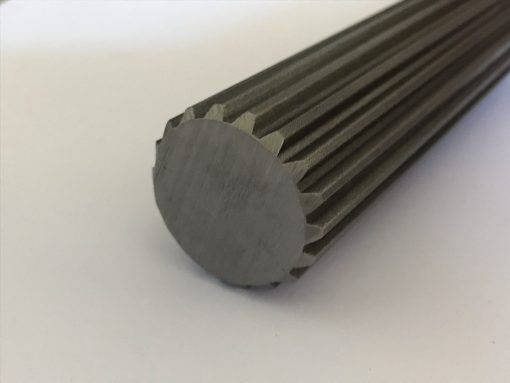
What materials are commonly used in the construction of spline shafts?
Various materials are commonly used in the construction of spline shafts, depending on the specific application requirements. Here’s a list of commonly used materials:
1. Steel:
Steel is one of the most widely used materials for spline shafts. Different grades of steel, such as carbon steel, alloy steel, or stainless steel, can be employed based on factors like strength, hardness, and corrosion resistance. Steel offers excellent mechanical properties, including high strength, durability, and wear resistance, making it suitable for a broad range of applications.
2. Alloy Steel:
Alloy steel is a type of steel that contains additional alloying elements, such as chromium, molybdenum, or nickel. These alloying elements enhance the mechanical properties of the steel, providing improved strength, toughness, and wear resistance. Alloy steel spline shafts are commonly used in applications that require high torque capacity, durability, and resistance to fatigue.
3. Stainless Steel:
Stainless steel is known for its corrosion resistance properties, making it suitable for applications where the spline shaft is exposed to moisture or corrosive environments. Stainless steel spline shafts are commonly used in industries such as food processing, chemical processing, marine, and medical equipment.
4. Aluminum:
Aluminum is a lightweight material with good strength-to-weight ratio. It is often used in applications where weight reduction is a priority, such as automotive and aerospace industries. Aluminum spline shafts can provide advantages such as decreased rotating mass and improved fuel efficiency.
5. Titanium:
Titanium is a strong and lightweight material with excellent corrosion resistance. It is commonly used in high-performance applications where weight reduction, strength, and corrosion resistance are critical factors. Titanium spline shafts find applications in aerospace, motorsports, and high-end industrial equipment.
6. Brass:
Brass is an alloy of copper and zinc, offering good machinability and corrosion resistance. It is often used in applications that require electrical conductivity or a non-magnetic property. Brass spline shafts can be found in industries such as electronics, telecommunications, and instrumentation.
7. Plastics and Composite Materials:
In certain applications where weight reduction, corrosion resistance, or noise reduction is important, plastics or composite materials can be used for spline shafts. Materials such as nylon, acetal, or fiber-reinforced composites can provide specific advantages in terms of weight, low friction, and resistance to chemicals.
It’s important to note that material selection for spline shafts depends on factors such as load requirements, environmental conditions, operating temperatures, and cost considerations. Engineers and designers evaluate these factors to determine the most suitable material for a given application.
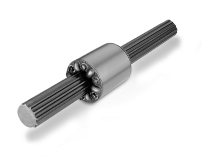
What are the advantages of using spline shafts in mechanical systems?
Using spline shafts in mechanical systems offers several advantages. Here’s a detailed explanation:
1. Trasmissione della coppia:
Spline shafts provide efficient torque transmission between the driving and driven components. The interlocking splines ensure a secure and reliable transfer of rotational force, enabling the transmission of power and motion in mechanical systems.
2. Relative Movement Accommodation:
Spline shafts can accommodate relative movement between the driving and driven components. They allow axial, radial, and angular displacements, compensating for misalignments, thermal expansion, and vibrations. This flexibility helps to maintain proper engagement and minimize stress concentrations.
3. Distribuzione del carico:
The splines on the shaft distribute the transmitted load across the entire engagement surface. This helps to reduce localized stresses and prevents premature wear or failure of the components. The load distribution capability of spline shafts contributes to the overall durability and longevity of the mechanical system.
4. Precise Positioning and Control:
Spline shafts enable precise positioning and control of mechanical components. The splines provide accurate rotational alignment, allowing for precise angular positioning and indexing. This is crucial in applications where precise control and synchronization of movements are required.
5. Interchangeability and Standardization:
Spline shafts are available in standardized designs and dimensions. This enables interchangeability between components and facilitates easier maintenance and replacement. Standardization also simplifies the design and manufacturing processes, reducing costs and lead times.
6. High Power Transmission Capacity:
Spline shafts are designed to withstand high torque loads. The interlocking splines provide a large contact area, distributing the transmitted torque across multiple teeth. This allows spline shafts to handle higher power transmission requirements, making them suitable for heavy-duty applications.
7. Versatility:
Spline shafts can be designed and manufactured to suit various application requirements. They can be customized in terms of size, shape, number of splines, and spline profile to match the specific needs of a mechanical system. This versatility makes spline shafts adaptable to a wide range of industries and applications.
8. Reduced Slippage and Backlash:
When properly designed and manufactured, spline shafts exhibit minimal slippage and backlash. The tight fit between the splines prevents significant axial or radial movement during torque transmission, resulting in improved efficiency and precision in mechanical systems.
In summary, the advantages of using spline shafts in mechanical systems include efficient torque transmission, accommodation of relative movement, load distribution, precise positioning and control, interchangeability, high power transmission capacity, versatility, and reduced slippage and backlash. These advantages make spline shafts a reliable and effective choice in various applications where power transfer, flexibility, and precise motion control are essential.


editor by CX 2023-09-08
Trasforma la guida in una richiesta di preventivo (RFQ).
Inviare il disegno controllato, l'interfaccia di accoppiamento, le condizioni del materiale e le informazioni relative al funzionamento per la verifica tecnica.
Richiedi un preventivo