Produktbeskrivelse
Customizations to products
| specification | |||||||
| WAI No | No Of Teeth | Rotation | Length(mm) | Pinion O.D.(mm) | No OF Splines | Pinion I.D.(mm) | Drive O.D.(mm) |
| 6/12 | CW | 126 | 14 | 12 | |||
| 6/12 | CW | 117 | 14 | 10 | |||
| Punkt | Spiral gearaksel |
| Materiale | 4140, 4340, 40Cr, 42Crmo, 42Crmo4 |
| OEM NR. | Tilpas |
| Certificering | ISO/TS16949 |
| Test Requirement | Magnetic Powder Test, Hardness Test, Dimension Test |
| Farve | Paint , Natural Finish ,Machining All Around |
| Materiale | Aluminium: 5000-serien (5052…)/6000-serien (6061…)/7000-serien (7075…) |
| Steel: Carbon Steel,Middle Steel,Steel Alloy,etc. | |
| Rustfrit stål: 303/304/316 osv. | |
| Kobber/messing/bronze/rødt kobber osv. | |
| Plastic:ABS,PP,PC,Nylon,Delrin(POM),Bakelite,etc. | |
| Størrelse | According to Customer’s drawing or samples |
| Behandle | CNC machining,Turning,Milling,Stamping,Grinding,Welding,Wire Injection,Cutting,etc. |
| Tolerance | ≥+/-0.03mm |
| Overfladebehandling | (Sandblast)&(Hard)&(Color)Anodizing,(Chrome,Nickel,Zinc…)Plating,Painting,Powder Coating,Polishing,Blackened,Hardened,Lasering,Engraving,etc. |
| Filformater | ProE,SolidWorks,UG,CAD,PDF(IGS,XT,STP,STL) |
| Prøve | Tilgængelig |
| Pakning | Spline protect cover ,Wood box ,Waterproof membrane; Or per customers’ requirements. |
Prøveservice
We provide free sample for confirmation and customer bears the freight charges
OEM-service
Having our own factory and professional technicians,we welcome OEM orders as well.We can design and produce the specific product you need according to your detail information
After-sale Service
Our enthusiastic and friendly customer service representatives are ready to assist with any questions or problems
| Materiale: | Legeret stål |
|---|---|
| Load: | Drive Shaft |
| Axis Shape: | Straight Shaft |
| Appearance Shape: | Round |
| No of Teeth: | 6/12 |
| Rotation: | Cw |
| Prøver: |
US$ 0/Piece
1 Piece(Min.Order) | |
|---|
| Tilpasning: |
Tilgængelig
| Tilpasset anmodning |
|---|

How does the design of a spline shaft affect its performance?
The design of a spline shaft plays a crucial role in determining its performance characteristics. Here’s a detailed explanation:
1. Momenttransmission:
The design of the spline shaft directly affects its ability to transmit torque efficiently. Factors such as the spline profile, number of splines, and engagement length influence the torque-carrying capacity of the shaft. A well-designed spline profile with optimized dimensions ensures maximum contact area and load distribution, resulting in improved torque transmission.
2. Lastfordeling:
A properly designed spline shaft distributes the applied load evenly across the engagement surfaces. This helps to minimize stress concentrations and prevents localized wear or failure. The design should consider factors such as spline profile geometry, tooth form, and surface finish to achieve optimal load distribution and enhance the overall performance of the shaft.
3. Kompensation for skævhed:
Spline shafts can accommodate a certain degree of misalignment between the mating components. The design of the spline profile can incorporate features that allow for angular or parallel misalignment, ensuring effective power transmission even under misaligned conditions. Proper design considerations help maintain smooth operation and prevent excessive stress or premature failure.
4. Torsional Stiffness:
The design of the spline shaft influences its torsional stiffness, which is the resistance to twisting under torque. A stiffer shaft design reduces torsional deflection, improves torque response, and enhances the system’s overall performance. The shaft material, diameter, and spline profile all contribute to achieving the desired torsional stiffness.
5. Fatigue Resistance:
The design of the spline shaft should consider fatigue resistance to ensure long-term durability. Fatigue failure can occur due to repeated or cyclic loading. Proper design practices, such as optimizing the spline profile, selecting appropriate materials, and incorporating suitable surface treatments, can enhance the fatigue resistance of the shaft and extend its service life.
6. Surface Finish and Lubrication:
The surface finish of the spline shaft and the lubrication used significantly impact its performance. A smooth surface finish reduces friction, wear, and the potential for corrosion. Proper lubrication ensures adequate film formation, reduces heat generation, and minimizes wear. The design should incorporate considerations for surface finish requirements and lubrication provisions to optimize the shaft’s performance.
7. Environmental Considerations:
The design should take into account the specific environmental conditions in which the spline shaft will operate. Factors such as temperature, humidity, exposure to chemicals, or abrasive particles can affect the shaft’s performance and longevity. Suitable material selection, surface treatments, and sealing mechanisms can be incorporated into the design to withstand the environmental challenges.
8. Manufacturing Feasibility:
The design of the spline shaft should also consider manufacturing feasibility and cost-effectiveness. Complex designs may be challenging to produce or require specialized manufacturing processes, resulting in increased production costs. Balancing design complexity with manufacturability is crucial to ensure a practical and efficient manufacturing process.
By considering these design factors, engineers can optimize the performance of spline shafts, resulting in enhanced torque transmission, improved load distribution, misalignment compensation, torsional stiffness, fatigue resistance, surface finish, and environmental compatibility. A well-designed spline shaft contributes to the overall efficiency, reliability, and longevity of the mechanical system in which it is used.
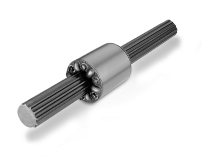
Hvordan håndterer splineaksler variationer i lasteevne og vægt?
Splineaksler er designet til at håndtere variationer i belastningskapacitet og vægt i mekaniske systemer. Sådan opnår de dette:
1. Materialevalg:
Splineaksler er typisk lavet af højstyrkematerialer såsom stål eller legering, valgt for deres evne til at modstå tunge belastninger og give holdbarhed. Valget af materialer tager højde for faktorer som trækstyrke, flydespænding og udmattelsesmodstand for at sikre, at akslen kan håndtere variationer i belastningskapacitet og vægt.
2. Ingeniørdesign:
Splineaksler designes med hensyntagen til de forventede belastninger og vægte, de vil blive udsat for. Dimensioner, profil og antal splines bestemmes ud fra de forventede momentkrav og størrelsen af de påførte belastninger. Ved omhyggeligt at konstruere designet kan splineaksler håndtere variationer i lastekapacitet og vægt, samtidig med at strukturel integritet og pålidelig ydeevne opretholdes.
3. Lastfordeling:
Splineakslernes sammenlåsende indgreb muliggør effektiv lastfordeling langs akslens længde. Dette hjælper med at fordele de påførte belastninger jævnt, forhindre lokale spændingskoncentrationer og minimere risikoen for deformation eller svigt. Ved at fordele lasten kan splineaksler håndtere variationer i lastekapacitet og vægt uden at gå på kompromis med deres ydeevne.
4. Strukturel forstærkning:
I applikationer med højere belastningskapacitet eller tungere vægte kan spline-aksler inkorporere yderligere strukturelle funktioner for at forbedre deres styrke. Dette kan omfatte tykkere spline-tænder, større spline-diametre eller forstærkede sektioner langs akslen. Ved at forstærke kritiske områder kan spline-aksler håndtere øgede belastninger og vægte, samtidig med at deres integritet bevares.
5. Smøring og overfladebehandling:
Korrekt smøring er afgørende for, at splineaksler kan håndtere variationer i belastningskapacitet og vægt. Smøremidler reducerer friktion mellem kontaktfladerne, minimerer slid og forhindrer for tidligt svigt. Derudover kan overfladebehandlinger såsom belægninger eller varmebehandlinger forbedre splineakslens hårdhed og slidstyrke og dermed forbedre dens evne til at håndtere varierende belastninger og vægte.
6. Test og validering:
Splineaksler gennemgår grundig testning og validering for at sikre, at de opfylder de specificerede krav til belastningskapacitet og vægt. Dette kan involvere laboratorietestning, simuleringsanalyse eller felttestning under virkelige forhold. Ved at underkaste splineaksler grundig testning kan producenter verificere deres ydeevne og sikre, at de kan håndtere variationer i belastningskapacitet og vægt.
Samlet set er splineaksler designet og konstrueret til at håndtere variationer i belastningskapacitet og vægt ved at anvende passende materialer, optimere designet, fordele belastninger effektivt, indarbejde strukturel forstærkning når det er nødvendigt, implementere korrekt smøring og overfladebehandlinger samt udføre grundig testning og validering. Disse foranstaltninger gør det muligt for splineaksler pålideligt at overføre drejningsmoment og håndtere varierende belastninger i forskellige mekaniske applikationer.
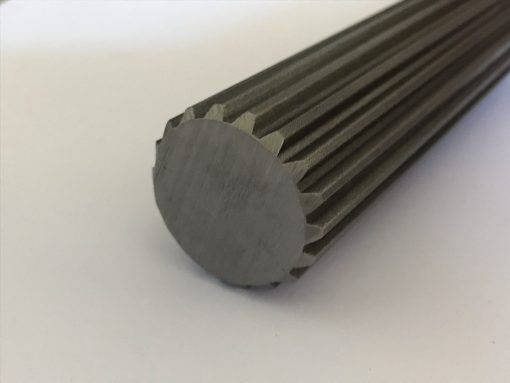
How does a spline shaft differ from other types of shafts?
A spline shaft differs from other types of shafts in several ways. Here’s a detailed explanation:
1. Spline Structure:
A spline shaft features a series of ridges or teeth (splines) that are machined onto its surface. These splines create a precise and controlled interface with mating components, allowing for torque transmission and relative movement. In contrast, other types of shafts, such as plain shafts or keyed shafts, do not have the splines and rely on different mechanisms for torque transmission.
2. Torque Transmission and Relative Movement:
Unlike plain shafts or keyed shafts, which transmit torque through a frictional or mechanical connection, spline shafts allow for both torque transmission and relative movement between the shaft and mating components. The splines on the shaft engage with corresponding splines on the mating component, creating an interlock that transfers rotational force while accommodating axial or radial displacement. This feature provides flexibility and is particularly useful in applications where misalignment or relative movement needs to be accommodated.
3. Lastfordeling:
One of the advantages of spline shafts is their ability to distribute loads over a larger surface area. The multiple contact points created by the splines help distribute the applied load evenly along the shaft’s length. This load distribution minimizes stress concentrations and reduces the risk of premature wear or failure. In contrast, other types of shafts may rely on a single keyway or frictional contact, which can result in higher stress concentrations and limited load distribution.
4. Design Flexibility:
Spline shafts offer greater design flexibility compared to other types of shafts. The number, size, and shape of the splines can be customized to meet specific design requirements. This allows for optimization of torque transmission, load-bearing capacity, and relative movement characteristics based on the application’s needs. Other types of shafts may have more standardized designs and limited customization options.
5. Application Variability:
Spline shafts find widespread use in various industries and applications where torque transmission, relative movement, and load distribution are crucial. They are commonly employed in gearboxes, power transmission systems, steering mechanisms, and other rotational systems. Other types of shafts, such as plain shafts or keyed shafts, may be more suitable for applications that require simpler torque transmission without the need for relative movement.
6. Installation and Maintenance:
When compared to other types of shafts, spline shafts may require more precise machining and alignment during installation. The mating components must be accurately matched to ensure proper engagement and torque transfer. Additionally, spline shafts may require periodic inspection and maintenance to ensure the integrity of the splines and optimal performance.
In summary, spline shafts differ from other types of shafts due to their spline structure, ability to accommodate relative movement, load distribution capability, design flexibility, application variability, and specific installation and maintenance requirements. These characteristics make spline shafts well-suited for applications that demand precise torque transmission, flexibility, and load distribution.


editor by CX 2023-11-14
Lav guiden om til en OFFQ
Send den kontrollerede tegning, sammenkoblingsgrænsefladen, materialetilstanden og driftsoplysningerne til teknisk gennemgang.
Anmod om et tilbud