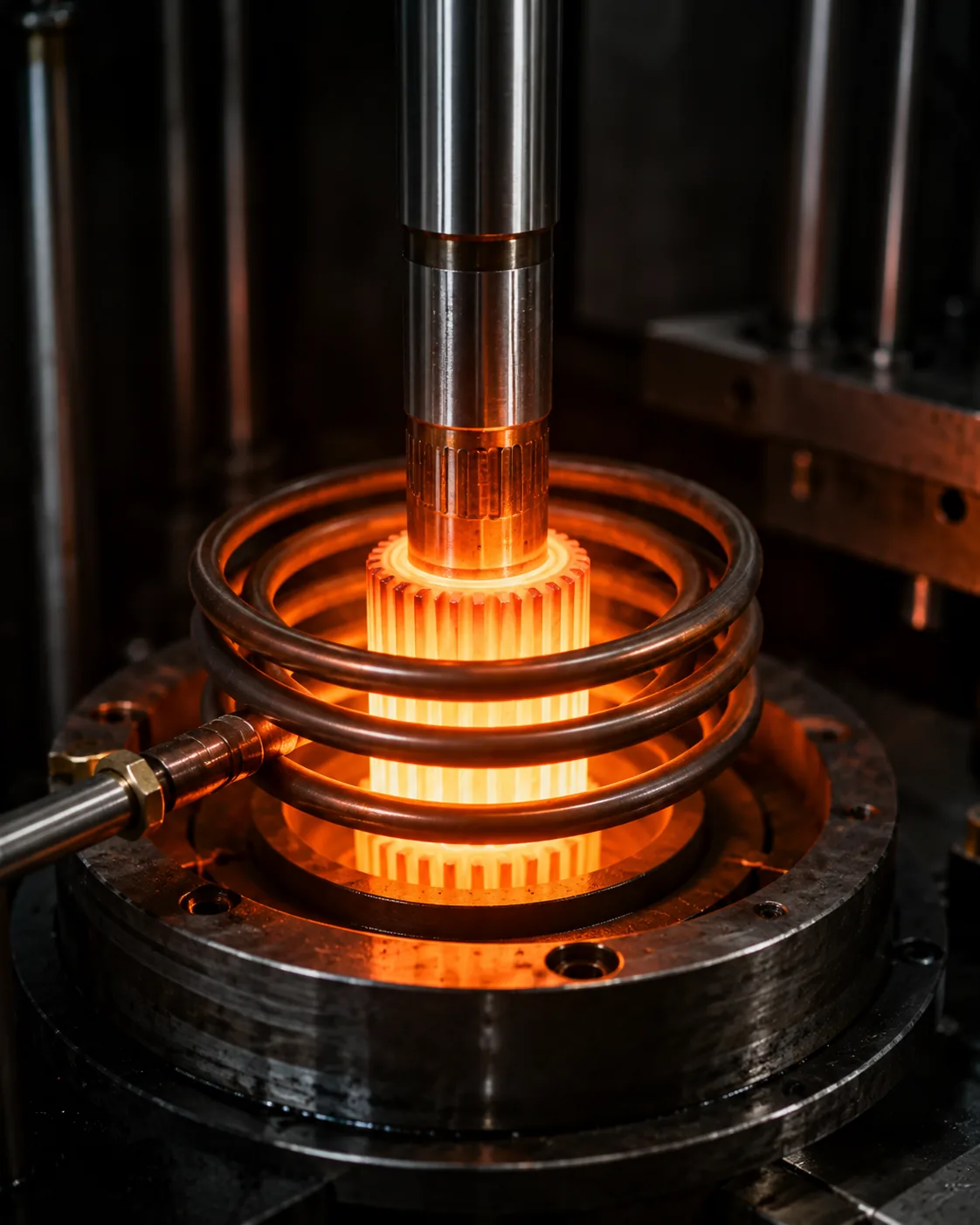
Quenched and Tempered Internal Spline Shafts: What to Specify
Quenched and Tempered Internal Spline Shafts: What to Specify — For a quenched-and-tempered internal spline, define the material condition, internal…
Read MoreSelection, manufacturing, inspection, applications and troubleshooting for spline shaft interfaces.
Quenched and Tempered Internal Spline Shafts: What to Specify — For a quenched-and-tempered internal spline, define the material condition, internal…
Read MoreCarburized vs Induction-Hardened Spline Shafts — Carburizing and induction hardening both create hardened working surfaces, but they do so through…
Read MoreWhen 18CrNiMo7-6 Makes Sense for an Integrated Gear and Spline Shaft — An integrated gear-and-spline shaft places multiple torque-transfer features,…
Read MoreC45 vs 20CrMo for Spline Shafts: Material Selection Factors — C45 and 20CrMo can support different heat-treatment routes and section requirements, so…
Read More
Involute vs Straight-Sided Splines: Selection Considerations — Involute and straight-sided splines use different flank geometry, manufacturing methods…
Read MoreSpline Shaft Fit and Tolerance: What Engineers Need to Confirm — Spline fit is the combined result of tooth thickness, space width, diameter clearances,…
Read MoreHow to Read Pressure Angle on a Spline Shaft Drawing — Pressure angle describes the orientation of the working tooth flanks and is a mating-compatibility…
Read MoreHow Module and Tooth Count Define a Spline Shaft Interface — Module and tooth count work together to define the tooth size and the basic pitch…
Read MoreExternal vs Internal Spline Shafts: Which Interface Fits Your Design? — Choose an external or internal spline by deciding where the male and female tooth…
Read MoreHow to Specify a Custom Spline Shaft from a Drawing — A custom spline shaft drawing should define the mating tooth system, functional diameters,…
Read More