Описание продукта
HangZhou Factory Forging Precision Stainless Steel Splines Gear Shaft
Product Descriptions:
Main Features:
Spur Gear
1. Produce strictly in accordance with ANSI or DIN standard dimension
2. Material: SCM 415 steel
3. Bore: Finished bore
4. Precision grade: DIN 5
5. Surface treatment: Carburizing and Quenching
6. Module: Module 1.5, Module 2, Module 2.5, Module 3
7. Tooth: From Z10 to Z13
Параметры продукта
| Product name | Spur Gear & Helical Gear & Gear Shaft |
| Customized service | OEM, drawings or samples customize |
| Materials Available | Stainless Steel, Carbon Steel, S45C, SCM415, 20CrMoTi, 40Cr, Brass, SUS303/304, Bronze, Iron, Aluminum Alloy etc |
| Термическая обработка | Quenching & Tempering, Carburizing & Quenching, High-frequency Hardening, Carbonitriding…… |
| Обработка поверхности | Conditioning, Carburizing and Quenching,Tempering ,High frequency quenching, Tempering, Blackening, QPQ, Cr-plating, Zn-plating, Ni-plating, Electroplate, Passivation, Picking, Plolishing, Lon-plating, Chemical vapor deposition(CVD), Physical vapour deposition(PVD)… |
| BORE | Finished bore, Pilot Bore, Special request |
| Processing Method | Molding, Shaving, Hobbing, Drilling, Tapping, Reaming, Manual Chamfering, Grinding etc |
| Угол давления | 20 Degree |
| Твердость | 55- 60HRC |
| Размер | Customer Drawings & ISO standard |
| Упаковка | Wooden Case/Container and pallet, or made-to-order |
| Сертификат | ISO9001:2008 |
| Machining Process | Gear Hobbing, Gear Milling, Gear Shaping, Gear Broaching, Gear Shaving, Gear Grinding and Gear Lapping |
| Приложения | Printing Equipment Industry, Laser Equipment Industry, Automated Assemblyline Industry, Woodening Industry, Packaging Equipment Industry, Logistics storage Machinery Industry, Robot Industry, Machine Tool Equipment Industry |
Профиль компании
HangZhou CHINAMFG Gear Machinery Co.,LTD established in 2009, is a professional manufacture engaged in development, production, sales and service of timing pulley, precise spur gears, helical gears, bevel gear, worm& worm gear and so on. We located in HangZhou with convenient transposition excite. CHINAMFG Gear Machinery dedicated to strict quality control and thoughtful customer service. Our experienced staffs are always available to discuss your requirements, and fulfill your satisfaction.
Упаковка и доставка
| Упаковка | Polyethylene bag or oil paper for each item; Pile on carton or as customer’s demand |
| Delivery of Samples | By DHL, Fedex, UPS, TNT, EMS |
| Время выполнения | 10-15 working days as usual, 30days in busy season, it will based on the detailed order quantity. |
Часто задаваемые вопросы
| Main Markets? | North America, South America, Eastern Europe , West Europe , North Europe, South Europe, Asia |
| How to order? | * You send us drawing or sample |
| * We carry through project assessment | |
| * We give you our design for your confirmation | |
| * We make the sample and send it to you after you confirmed our design | |
| * You confirm the sample then place an order and pay us 30% deposit | |
| * We start producing | |
| * When the goods is done, you pay us the balance after you confirmed pictures or tracking numbers. | |
| * Trade is done, thank you!! |
Payment: T/T
If you are interested in our products, please tell us which materials, type, width, length u want.
| Приложение: | Electric Cars, Machinery, Agricultural Machinery, Automation Equipment |
|---|---|
| Твердость: | Затвердевшая поверхность зуба |
| Положение передачи: | External Gear |
| Способ изготовления: | Rolling Gear |
| Форма зубчатой части: | Spur Gear |
| Материал: | Нержавеющая сталь |
| Образцы: |
US$ 15/Piece
1 штука (минимальный заказ) | |
|---|
| Настройка: |
Доступный
| Индивидуальный запрос |
|---|
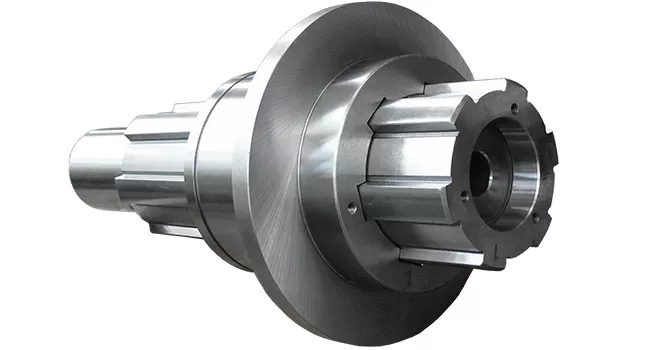
What are the different types of spline profiles and their applications?
Spline profiles are used in various applications to transmit torque and motion between mating components. Here’s a detailed explanation of different spline profiles and their applications:
1. Involute Splines:
Involute splines have a trapezoidal tooth profile that allows for smooth engagement and disengagement. They are widely used in power transmission applications, such as automotive gearboxes, where high torque transmission is required. Involute splines provide excellent load distribution and can accommodate misalignment.
2. Straight Sided Splines:
Straight sided splines have straight-sided teeth that provide efficient torque transmission and high torsional stiffness. They are commonly used in applications where precise positioning is required, such as machine tools, robotics, and aerospace systems. Straight sided splines offer accurate motion control and are resistant to misalignment.
3. Serrations:
Serrations are a type of spline profile with multiple teeth in the form of parallel ridges and grooves. They are often used in applications that involve axial or linear motion, such as indexing mechanisms, clamping systems, or power tools. Serrations provide secure locking and positioning capabilities.
4. Helical Splines:
Helical splines have teeth that are helically shaped, similar to helical gears. They offer smooth and gradual tooth engagement, resulting in reduced noise and vibration. Helical splines are commonly used in applications that require high torque transmission and where quiet operation is critical, such as heavy machinery, industrial equipment, and automotive drivetrains.
5. Crowned Splines:
Crowned splines have a modified tooth profile with a slight curvature along the tooth length. This design helps distribute the load evenly across the tooth surfaces, reducing stress concentrations and improving load-carrying capacity. Crowned splines are used in applications where high load capacity and resistance to wear are essential, such as heavy-duty gearboxes, marine propulsion systems, or mining equipment.
6. Ball Splines:
Ball splines incorporate recirculating ball bearings within the spline nut and grooves on the shaft. This design enables linear motion with low friction and high precision. Ball splines are commonly used in applications that require smooth linear motion, such as CNC machines, robotics, or linear actuators.
7. Custom Splines:
In addition to the standard spline profiles mentioned above, custom spline profiles can be designed for specific applications based on unique requirements. Custom splines can be tailored to optimize torque transmission, load distribution, misalignment compensation, or other specific performance parameters.
The choice of spline profile depends on factors such as the magnitude of torque, required accuracy, misalignment tolerance, noise and vibration considerations, and environmental conditions. Engineers and designers carefully select the appropriate spline profile to ensure optimal performance and reliability in the intended application.
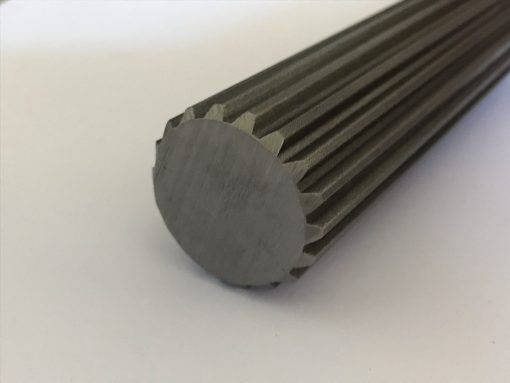
What materials are commonly used in the construction of spline shafts?
Various materials are commonly used in the construction of spline shafts, depending on the specific application requirements. Here’s a list of commonly used materials:
1. Steel:
Steel is one of the most widely used materials for spline shafts. Different grades of steel, such as carbon steel, alloy steel, or stainless steel, can be employed based on factors like strength, hardness, and corrosion resistance. Steel offers excellent mechanical properties, including high strength, durability, and wear resistance, making it suitable for a broad range of applications.
2. Alloy Steel:
Alloy steel is a type of steel that contains additional alloying elements, such as chromium, molybdenum, or nickel. These alloying elements enhance the mechanical properties of the steel, providing improved strength, toughness, and wear resistance. Alloy steel spline shafts are commonly used in applications that require high torque capacity, durability, and resistance to fatigue.
3. Stainless Steel:
Stainless steel is known for its corrosion resistance properties, making it suitable for applications where the spline shaft is exposed to moisture or corrosive environments. Stainless steel spline shafts are commonly used in industries such as food processing, chemical processing, marine, and medical equipment.
4. Aluminum:
Aluminum is a lightweight material with good strength-to-weight ratio. It is often used in applications where weight reduction is a priority, such as automotive and aerospace industries. Aluminum spline shafts can provide advantages such as decreased rotating mass and improved fuel efficiency.
5. Titanium:
Titanium is a strong and lightweight material with excellent corrosion resistance. It is commonly used in high-performance applications where weight reduction, strength, and corrosion resistance are critical factors. Titanium spline shafts find applications in aerospace, motorsports, and high-end industrial equipment.
6. Brass:
Brass is an alloy of copper and zinc, offering good machinability and corrosion resistance. It is often used in applications that require electrical conductivity or a non-magnetic property. Brass spline shafts can be found in industries such as electronics, telecommunications, and instrumentation.
7. Plastics and Composite Materials:
In certain applications where weight reduction, corrosion resistance, or noise reduction is important, plastics or composite materials can be used for spline shafts. Materials such as nylon, acetal, or fiber-reinforced composites can provide specific advantages in terms of weight, low friction, and resistance to chemicals.
It’s important to note that material selection for spline shafts depends on factors such as load requirements, environmental conditions, operating temperatures, and cost considerations. Engineers and designers evaluate these factors to determine the most suitable material for a given application.
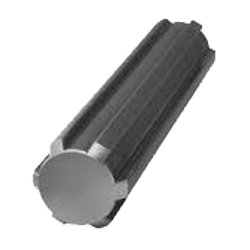
Каковы основные компоненты и конструктивные особенности шлицевого вала?
Шлицевой вал состоит из нескольких ключевых компонентов и включает в себя определенные конструктивные особенности, обеспечивающие его функциональность и производительность. Вот подробное объяснение:
1. Корпус вала:
Основным компонентом шлицевого вала является корпус вала, который обеспечивает структурную целостность и служит основанием для шлицевых элементов. Корпус вала обычно имеет цилиндрическую форму и изготавливается из таких материалов, как сталь, нержавеющая сталь или другие легированные металлы. Выбор материала зависит от таких факторов, как требования к применению, крутящие нагрузки и условия окружающей среды.
2. Сплайны:
Шлицы — ключевая конструктивная особенность шлицевого вала. Это выступы или зубья, выточенные на поверхности вала. Шлицы создают механизм сцепления с сопрягаемыми компонентами, обеспечивая передачу крутящего момента и относительное перемещение. Количество, размер и форма шлицов могут варьироваться в зависимости от требований к применению и конструктивных особенностей.
3. Профиль сплайна:
Профиль шлицов относится к конкретной форме или геометрии шлицов. К распространенным типам профилей шлицов относятся эвольвентный, прямобоковый и зубчатый. Профиль шлицов выбирается на основе таких факторов, как требования к передаче крутящего момента, распределение нагрузки и желаемые характеристики зацепления с сопрягаемыми компонентами. Профиль шлицов обеспечивает оптимальный контакт и передачу крутящего момента между шлицевым валом и сопрягаемым компонентом.
4. Шлицевая посадка:
Шлицевая посадка — это соотношение размеров шлицевого вала и сопрягаемого компонента. Она определяет зазор или натяг между шлицами, обеспечивая надлежащее зацепление и передачу крутящего момента. Шлицевая посадка может быть классифицирована по различным параметрам, таким как посадка с зазором, переходная посадка или посадка с натягом, в зависимости от желаемого уровня зазора или натяга.
5. Качество обработки поверхности:
Качество обработки поверхности шлицевого вала имеет решающее значение для его рабочих характеристик. Шлицы и корпус вала должны иметь гладкую и однородную поверхность, чтобы минимизировать трение, износ и риск концентрации напряжений. Качество обработки поверхности может быть достигнуто с помощью механической обработки, шлифовки или других методов обработки поверхности в соответствии с требуемыми спецификациями.
6. Смазка:
Для обеспечения плавной работы и снижения износа шлицевые валы часто смазываются. На поверхность шлицов наносятся смазки с соответствующей вязкостью и смазывающими свойствами, чтобы минимизировать трение, рассеивать тепло и предотвратить преждевременный износ или повреждение шлицов и сопрягаемых компонентов. Смазка также помогает поддерживать функциональность и продлевать срок службы шлицевого вала.
7. Допуски на механическую обработку:
Точная механическая обработка имеет решающее значение для шлицевых валов, поскольку позволяет достичь требуемой точности размеров и обеспечить надлежащее зацепление с сопрягаемыми компонентами. В процессе производства поддерживаются жесткие допуски на механическую обработку, чтобы гарантировать соответствие профиля шлицов, размеров и качества поверхности заданным проектным требованиям. Это обеспечивает взаимозаменяемость и совместимость шлицевых валов в различных областях применения.
Вкратце, к ключевым компонентам и конструктивным особенностям шлицевого вала относятся корпус вала, шлицы, профиль шлицов, посадка шлицов, качество обработки поверхности, смазка и допуски при механической обработке. Эти элементы работают вместе, обеспечивая передачу крутящего момента, относительное перемещение и распределение нагрузки, а также гарантируя функциональность, долговечность и производительность шлицевого вала.


editor by CX 2023-09-20
Превратите руководство в запрос на коммерческое предложение (RFQ).
Для технической проверки предоставьте чертеж, информацию о сопряжении, состоянии материалов и условиях эксплуатации.
Запросить ценовое предложение