Description du produit
CNC Precision Parts & OEM Parts Business Unit, 1 of our 3 most important business segment.
At the beginning, CNC BU was established for our own automation line spare parts demand, with our own CNC BU, our automation line can have fast and good non-standard spare parts supply, with a very good cost control.
During the last 10+ years, our CNC BU not only fulfilled our own demand, but also successfully supplied millions of non-standard spare parts according to our client’s demand.
Now with a 10+ years experienced team, highly equipped production workshop and test lab, our CNC BU grows to be a full solution precision spares supplier, we are familiar with German DIN standard, US ASTM standard, Japanese JIS standard, we can produce precision with um level in a constant quality base.
We can supply for you:
1. All kinds of Machining: Tuning, Milling, Grinding, Gear toothing, Wire cutting, Profile, Threads, and so on.
2. All kinds of Metal Materials: Carbon Steel (e.g., C45,42CrMo,16MnCr5), Stainless Steel(e.g., 303, 304, 316), Aluminum Alloy(e.g., AlCuMg2, AlSi10Mg, AlSi8Cu3, AlSi12, AlMg9, ADC12, A360, A380), Brass/Copper(e.g., ZCuZn16Si4, CuZn10, CuSn4, CuNi18Sn20), and so on.
3. All kinds of shape: Hollow Shaft, Profile Shaft, Housing, Flange, and so on.
4. All kinds of heat-treatments
5. All kinds of Coating
For more information, welcome to contact us
| Certification : | ISO |
|---|---|
| Couleur: | Personnalisé |
| Customized: | Personnalisé |
| Standard: | International |
| Type: | Transmission |
| Matériel: | Acier inoxydable |
| Personnalisation : |
Disponible
| Demande personnalisée |
|---|
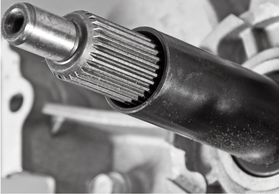
Comment les arbres cannelés contribuent-ils à une transmission de puissance efficace ?
Les arbres cannelés jouent un rôle essentiel dans la transmission efficace de la puissance au sein de divers systèmes mécaniques. Voici une explication détaillée de leur contribution à cette transmission efficace :
1. Transmission du couple :
Les arbres cannelés sont conçus pour transmettre le couple d'un composant à un autre. Ils assurent une liaison fiable et sans glissement, permettant un transfert de puissance efficace sans perte d'énergie. Les cannelures de l'arbre s'engrènent avec les cannelures correspondantes du composant, créant ainsi une liaison mécanique robuste pour la transmission du couple.
2. Répartition de la charge :
Les arbres cannelés répartissent uniformément la charge appliquée sur les surfaces d'engrènement. Les dents ou les rainures du profil cannelé assurent une répartition homogène de la charge sur de multiples points de contact. Cette répartition uniforme de la charge contribue à prévenir les concentrations de contraintes localisées et réduit le risque d'usure prématurée ou de défaillance. Une répartition efficace de la charge garantit une transmission de puissance fluide et fiable.
3. Compensation du désalignement :
Les arbres cannelés peuvent tolérer un certain degré de désalignement entre les composants en contact. La conception du profil cannelé permet un désalignement angulaire ou parallèle sans compromettre la transmission de puissance. Cette capacité de compensation du désalignement est essentielle pour maintenir une transmission de puissance efficace dans les situations où un alignement parfait est difficile à obtenir ou sujet à des variations.
4. Capacité de couple élevée :
Les arbres cannelés sont conçus pour résister à des couples élevés. Le profil des cannelures, la longueur d'engagement et le choix des matériaux sont optimisés pour répondre aux exigences de couple prévues. Cette capacité de couple élevée garantit une transmission efficace de la puissance, sans déformation excessive ni défaillance, dans des conditions normales d'utilisation.
5. Rigidité en torsion :
Les arbres cannelés présentent une rigidité torsionnelle élevée, ce qui signifie qu'ils résistent à la torsion ou à la déformation torsionnelle lorsqu'ils sont soumis à un couple. La conception de l'arbre, notamment son diamètre, le profil de ses cannelures et les propriétés des matériaux, contribue à cette rigidité. Une rigidité torsionnelle élevée minimise les pertes de puissance dues à la déformation ou à la flexion de l'arbre, permettant ainsi une transmission de puissance efficace.
6. Connexion fiable :
Les arbres cannelés assurent une liaison fiable et constante entre les composants menant et mené. Une fois correctement engagé, l'arbre cannelé maintient sa liaison, garantissant une transmission de puissance continue. Cette fiabilité est essentielle pour maintenir l'efficacité et prévenir les pertes de puissance ou les interruptions de fonctionnement.
7. Réaction négative minimale :
Le jeu angulaire désigne le léger jeu de rotation entre les pièces assemblées. Les arbres cannelés, correctement conçus et fabriqués, permettent de minimiser ce jeu angulaire dans les systèmes de transmission de puissance. Un jeu angulaire réduit garantit un fonctionnement plus fluide, une précision accrue et un meilleur rendement en minimisant les pertes de puissance liées aux inversions de sens de rotation.
8. Conception compacte :
Les arbres cannelés constituent une solution compacte et peu encombrante pour la transmission de puissance. Leur conception permet un encombrement réduit tout en assurant une transmission de couple robuste. Cette compacité est particulièrement avantageuse dans les applications où l'espace est limité, comme les transmissions automobiles ou les machines compactes.
L'intégration d'arbres cannelés dans les systèmes mécaniques permet aux ingénieurs d'obtenir une transmission de puissance efficace, garantissant ainsi un transfert optimal de la puissance de la source motrice aux composants entraînés. Les caractéristiques uniques des arbres cannelés assurent une transmission de couple fiable, une répartition uniforme de la charge, la compensation des défauts d'alignement, une capacité de couple élevée, une rigidité en torsion, des liaisons fiables, un jeu minimal et une grande compacité.
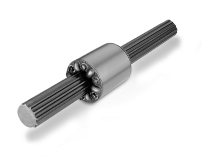
How do spline shafts handle variations in load capacity and weight?
Spline shafts are designed to handle variations in load capacity and weight in mechanical systems. Here’s how they accomplish this:
1. Material Selection:
Spline shafts are typically made from high-strength materials such as steel or alloy, chosen for their ability to withstand heavy loads and provide durability. The selection of materials takes into account factors such as tensile strength, yield strength, and fatigue resistance to ensure the shaft can handle variations in load capacity and weight.
2. Engineering Design:
Spline shafts are designed with consideration for the anticipated loads and weights they will encounter. The dimensions, profile, and number of splines are determined based on the expected torque requirements and the magnitude of the applied loads. By carefully engineering the design, spline shafts can handle variations in load capacity and weight while maintaining structural integrity and reliable performance.
3. Répartition de la charge :
The interlocking engagement of spline shafts allows for effective load distribution along the length of the shaft. This helps distribute the applied loads evenly, preventing localized stress concentrations and minimizing the risk of deformation or failure. By distributing the load, spline shafts can handle variations in load capacity and weight without compromising their performance.
4. Structural Reinforcement:
In applications with higher load capacities or heavier weights, spline shafts may incorporate additional structural features to enhance their strength. This can include thicker spline teeth, larger spline diameters, or reinforced sections along the shaft. By reinforcing critical areas, spline shafts can handle increased loads and weights while maintaining their integrity.
5. Lubrication and Surface Treatment:
Proper lubrication is essential for spline shafts to handle variations in load capacity and weight. Lubricants reduce friction between the mating surfaces, minimizing wear and preventing premature failure. Additionally, surface treatments such as coatings or heat treatments can enhance the hardness and wear resistance of the spline shaft, improving its ability to handle varying loads and weights.
6. Testing and Validation:
Spline shafts undergo rigorous testing and validation to ensure they meet the specified load capacity and weight requirements. This may involve laboratory testing, simulation analysis, or field testing under real-world conditions. By subjecting spline shafts to thorough testing, manufacturers can verify their performance and ensure they can handle variations in load capacity and weight.
Overall, spline shafts are designed and engineered to handle variations in load capacity and weight by utilizing appropriate materials, optimizing the design, distributing loads effectively, incorporating structural reinforcement when necessary, implementing proper lubrication and surface treatments, and conducting thorough testing and validation. These measures enable spline shafts to reliably transmit torque and handle varying loads in diverse mechanical applications.
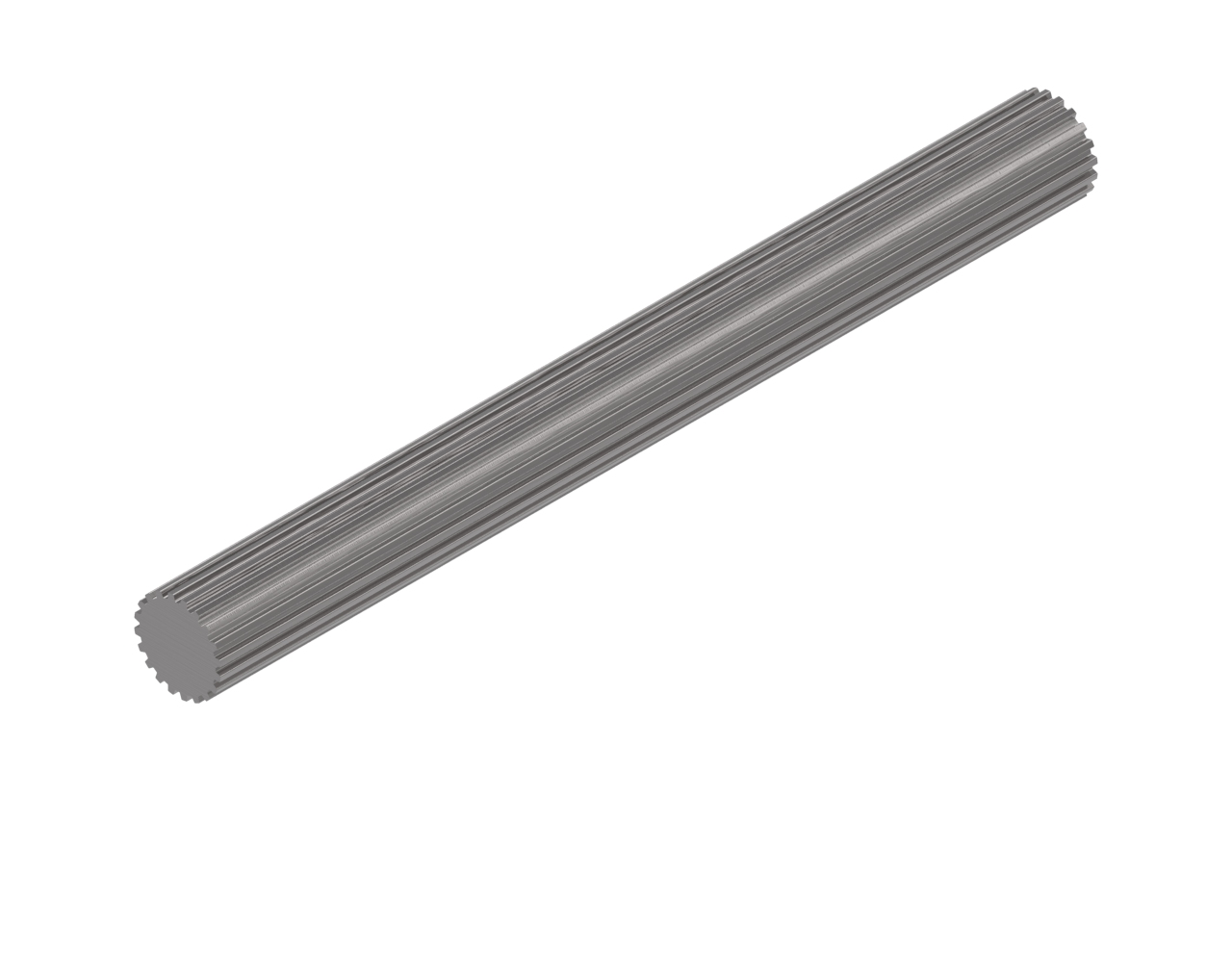
In which industries are spline shafts typically used?
Spline shafts find applications in a wide range of industries where torque transmission, relative movement, and load distribution are critical. Here’s a detailed explanation:
1. Automotive Industry:
The automotive industry extensively uses spline shafts in various components and systems. They are found in transmissions, drivelines, steering systems, differentials, and axle assemblies. Spline shafts enable the transmission of torque, accommodate relative movement, and ensure efficient power transfer in vehicles.
2. Aerospace and Defense Industry:
Spline shafts are essential in the aerospace and defense industry. They are used in aircraft landing gear systems, actuation mechanisms, missile guidance systems, engine components, and rotor assemblies. The aerospace and defense sector relies on spline shafts for precise torque transfer, relative movement accommodation, and critical control mechanisms.
3. Industrial Machinery and Equipment:
Spline shafts are widely employed in industrial machinery and equipment. They are used in gearboxes, machine tools, pumps, compressors, conveyors, printing machinery, and packaging equipment. Spline shafts enable torque transmission, accommodate misalignments and vibrations, and ensure accurate movement and synchronization of machine components.
4. Agriculture and Farming:
The agriculture and farming industry extensively uses spline shafts in equipment such as tractors, harvesters, and agricultural implements. Spline shafts are found in power take-off (PTO) units, transmission systems, hydraulic mechanisms, and steering systems. They enable torque transfer, accommodate relative movement, and provide flexibility in agricultural machinery.
5. Construction and Mining:
In the construction and mining industries, spline shafts are used in equipment such as excavators, loaders, bulldozers, and drilling rigs. They are found in hydraulic systems, power transmission systems, and articulated mechanisms. Spline shafts facilitate torque transmission, accommodate misalignments, and enable efficient power transfer in heavy-duty machinery.
6. Marine and Offshore:
Spline shafts have applications in the marine and offshore industry. They are used in propulsion systems, thrusters, rudders, winches, and marine pumps. Spline shafts enable torque transmission in marine vessels and offshore equipment, accommodating axial and radial movement, and ensuring reliable power transfer.
7. Energy and Power Generation:
Spline shafts are utilized in the energy and power generation sector. They are found in turbines, generators, compressors, and other rotating equipment. Spline shafts enable torque transmission and accommodate relative movement in power generation systems, ensuring efficient and reliable operation.
8. Rail and Transportation:
Spline shafts are employed in the rail and transportation industry. They are found in locomotives, railcar systems, and suspension mechanisms. Spline shafts enable torque transfer, accommodate movement and vibrations, and ensure precise control in rail and transportation applications.
These are just a few examples of the industries where spline shafts are typically used. Their versatility, torque transmission capabilities, and ability to accommodate relative movement make them vital components in various sectors that rely on efficient power transfer, flexibility, and precise control.


editor by CX 2023-09-30
Transformez le guide en demande de devis.
Veuillez envoyer le dessin technique, l'interface d'accouplement, les informations relatives à l'état du matériau et aux fonctions pour examen technique.
Demander un devis