Poros Spline Internal yang Didinginkan dan Ditempa: Apa yang Harus Ditentukan — Untuk spline internal yang dipadamkan dan ditempa, tentukan kondisi material, geometri gigi internal, datum lubang, kekerasan, penyelesaian permukaan, dan spline eksternal yang berpasangan. Fitur internal menambah batasan akses dan pengukuran, sehingga strategi inspeksi harus dipertimbangkan sebelum skema toleransi diselesaikan.
Untuk poros spline internal yang dipadamkan dan ditempaSpesifikasi yang paling dapat diandalkan adalah spesifikasi yang dapat diinterpretasikan dengan cara yang sama oleh perancang, pembeli, produsen, dan inspektur. Pembahasan di bawah ini berfokus pada masukan gambar yang terukur, kondisi perakitan, dan pemeriksaan praktis, bukan pada klaim torsi, kesesuaian, atau masa pakai universal yang tidak dapat ditentukan tanpa data geometri dan beban kerja yang lengkap.
Tujuan dari Kondisi Pendinginan dan Tempering
Tujuan dari Kondisi Pendinginan dan Tempering Hal ini memengaruhi ketahanan aus, perilaku kelelahan, distorsi, dan urutan pemesinan akhir. Karburisasi, pengerasan induksi, dan perlakuan pendinginan dan temper menciptakan kondisi material yang berbeda, sehingga tidak boleh dianggap sebagai cara yang dapat saling menggantikan untuk mencapai angka kekerasan tertentu.
Tentukan kekerasan dengan lokasi dan, jika diperlukan, kedalaman lapisan atau kondisi inti. Jika perlakuan panas dapat mengubah kelurusan atau hubungan fitur, rencanakan pemulihan datum dan inspeksi akhir setelah proses termal. Jurnal kritis atau permukaan gigi mungkin memerlukan bahan finishing ketika toleransi ketat harus dipulihkan. Untuk topik ini, hubungkan keputusan tersebut dengan komponen pasangannya dan revisi gambar yang digunakan untuk RFQ. Untuk Poros Spline Internal yang Didinginkan dan Ditempa: Apa yang Harus Ditentukan, terapkan pemeriksaan ini pada antarmuka poros spline internal yang didinginkan dan ditempa yang ditunjukkan pada gambar saat ini.
Akses Spline Internal
Akses Spline Internal Hal ini perlu ditinjau dalam konteks poros spline internal yang dikeraskan dan diberi perlakuan temper. Identifikasi komponen pasangannya, fungsi pengoperasian, dan fitur gambar yang dikendalikan oleh keputusan ini. Persyaratan tersebut harus terukur dan terkait dengan kesesuaian, transfer torsi, penyelarasan, keausan, atau kebutuhan perakitan lain yang telah ditentukan.
Pertimbangkan keputusan tersebut bersama dengan kondisi material, urutan manufaktur, dan akses inspeksi. Jika bagian tersebut merupakan pengganti, bandingkan geometri yang tidak aus dan komponen pasangannya alih-alih meniru kerusakan. Untuk desain baru, pertahankan pilihan proses yang fleksibel kecuali jika proses spesifik itu sendiri diperlukan oleh desain. Dalam tinjauan ini, kriteria penerimaan yang berguna adalah kriteria yang dapat ditelusuri ke karakteristik gambar fungsional. Untuk Poros Spline Internal yang Didinginkan dan Ditempa: Apa yang Harus Ditentukan, terapkan pemeriksaan ini pada antarmuka poros spline internal yang didinginkan dan ditempa yang ditunjukkan pada gambar saat ini.
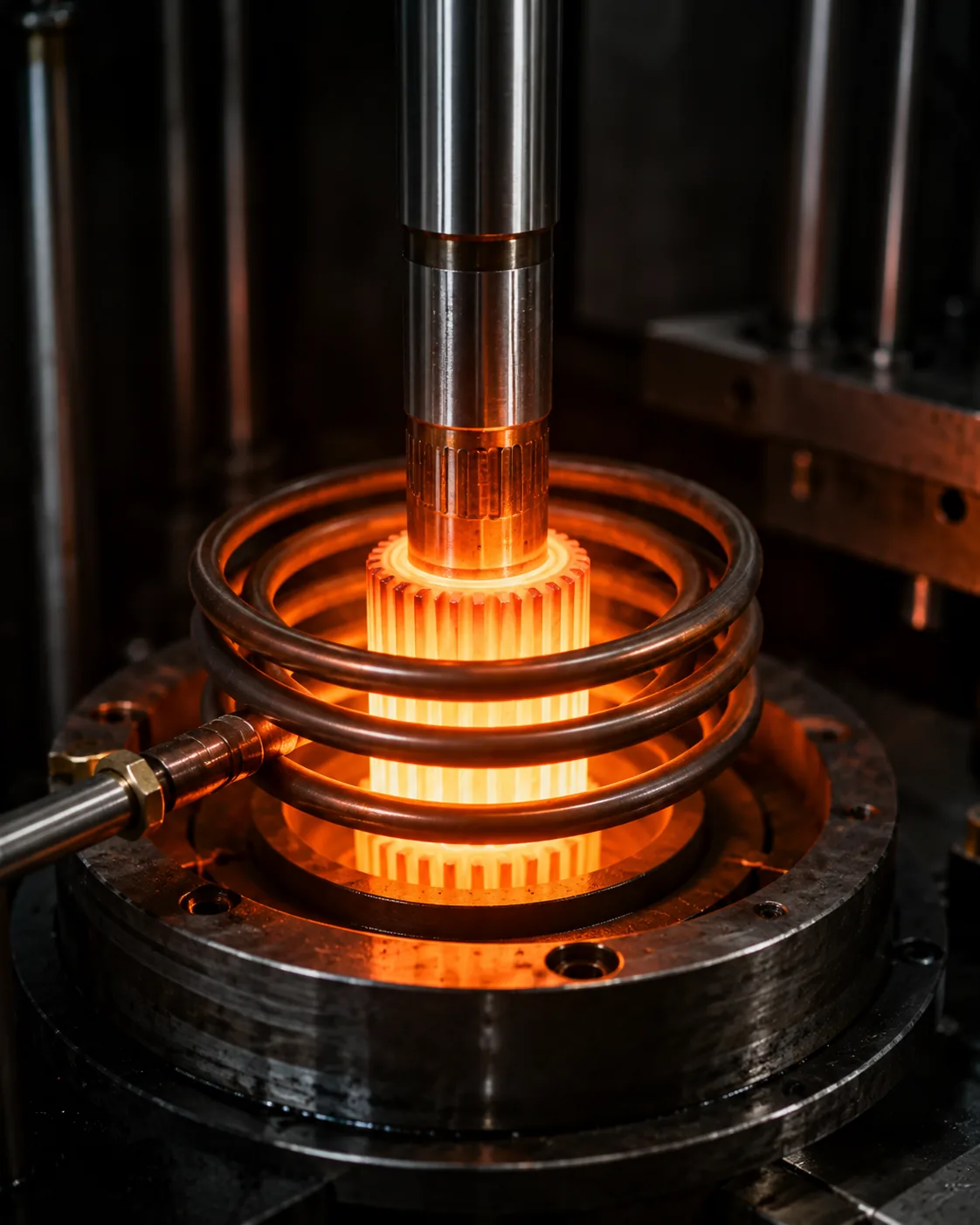
Distorsi Lubang
Distorsi Lubang Hal ini perlu ditinjau dalam konteks poros spline internal yang dikeraskan dan diberi perlakuan temper. Identifikasi komponen pasangannya, fungsi pengoperasian, dan fitur gambar yang dikendalikan oleh keputusan ini. Persyaratan tersebut harus terukur dan terkait dengan kesesuaian, transfer torsi, penyelarasan, keausan, atau kebutuhan perakitan lain yang telah ditentukan.
Pertimbangkan keputusan tersebut bersama dengan kondisi material, urutan manufaktur, dan akses inspeksi. Jika bagian tersebut merupakan pengganti, bandingkan geometri yang tidak aus dan komponen pasangannya alih-alih meniru kerusakan. Untuk desain baru, jaga agar pilihan proses tetap fleksibel kecuali jika proses spesifik itu sendiri diperlukan oleh desain. Untuk pekerjaan berulang, pertahankan datum dan dasar pengukuran yang sama kecuali jika persyaratan perakitan berubah. Untuk Poros Spline Internal yang Didinginkan dan Ditempa: Apa yang Harus Ditentukan, catat persyaratan yang dihasilkan pada gambar atau spesifikasi pembelian agar tetap konsisten pada pesanan berulang.
Penyelesaian Permukaan Setelah Perlakuan Panas
Penyelesaian Permukaan Setelah Perlakuan Panas Hal ini memengaruhi ketahanan aus, perilaku kelelahan, distorsi, dan urutan pemesinan akhir. Karburisasi, pengerasan induksi, dan perlakuan pendinginan dan temper menciptakan kondisi material yang berbeda, sehingga tidak boleh dianggap sebagai cara yang dapat saling menggantikan untuk mencapai angka kekerasan tertentu.
Tentukan kekerasan dengan lokasi dan, jika diperlukan, kedalaman lapisan atau kondisi inti. Jika perlakuan panas dapat mengubah kelurusan atau hubungan fitur, rencanakan pemulihan datum dan inspeksi akhir setelah proses termal. Jurnal kritis atau permukaan gigi mungkin memerlukan bahan finishing ketika toleransi ketat harus dipulihkan. Ketika tugas atau anggota pasangan berubah, tinjau kembali poin ini alih-alih melanjutkan asumsi sebelumnya. Untuk Poros Spline Internal yang Didinginkan dan Ditempa: Apa yang Harus Ditentukan, catat persyaratan yang dihasilkan pada gambar atau spesifikasi pembelian agar tetap konsisten pada pesanan berulang.
Interpretasi Kekerasan Hb
Interpretasi Kekerasan Hb Hal ini memengaruhi ketahanan aus, perilaku kelelahan, distorsi, dan urutan pemesinan akhir. Karburisasi, pengerasan induksi, dan perlakuan pendinginan dan temper menciptakan kondisi material yang berbeda, sehingga tidak boleh dianggap sebagai cara yang dapat saling menggantikan untuk mencapai angka kekerasan tertentu.
Tentukan kekerasan dengan lokasi dan, jika diperlukan, kedalaman lapisan atau kondisi inti. Jika perlakuan panas dapat mengubah kelurusan atau hubungan fitur, rencanakan pemulihan datum dan inspeksi akhir setelah proses termal. Jurnal kritis atau permukaan gigi mungkin memerlukan bahan finishing ketika toleransi ketat harus dipulihkan. Untuk topik ini, hubungkan keputusan tersebut dengan komponen pasangannya dan revisi gambar yang digunakan untuk RFQ. Saat meninjau poros spline internal yang dipadamkan dan ditempa, tinjau kembali poin ini setiap kali komponen pasangannya, kondisi material, atau tugas pengoperasian berubah.
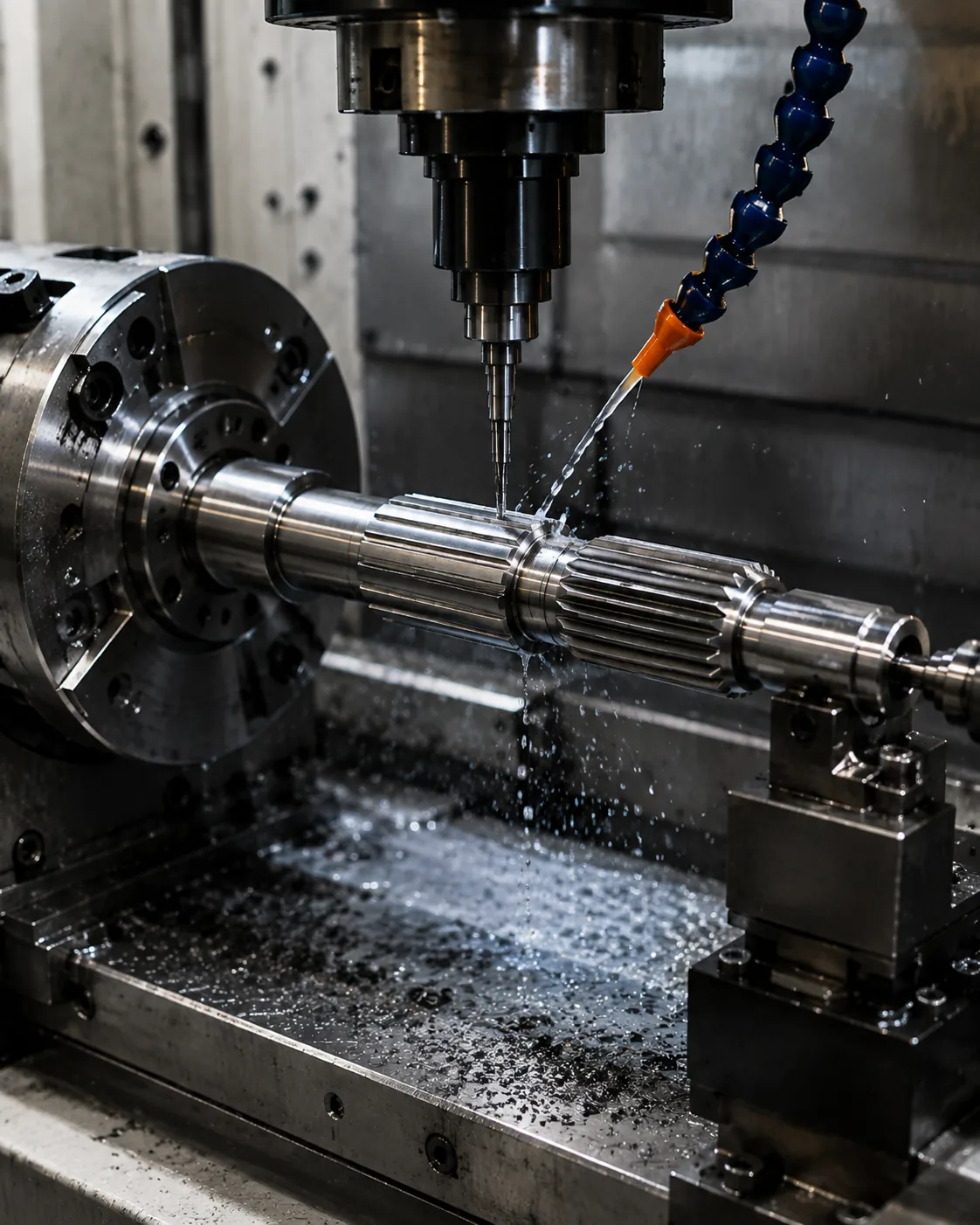
Urutan Pemesinan
Urutan Pemesinan Hal ini perlu ditinjau dalam konteks poros spline internal yang dikeraskan dan diberi perlakuan temper. Identifikasi komponen pasangannya, fungsi pengoperasian, dan fitur gambar yang dikendalikan oleh keputusan ini. Persyaratan tersebut harus terukur dan terkait dengan kesesuaian, transfer torsi, penyelarasan, keausan, atau kebutuhan perakitan lain yang telah ditentukan.
Pertimbangkan keputusan tersebut bersama dengan kondisi material, urutan manufaktur, dan akses inspeksi. Jika bagian tersebut merupakan pengganti, bandingkan geometri yang tidak aus dan komponen pasangannya alih-alih meniru kerusakan. Untuk desain baru, pertahankan pilihan proses yang fleksibel kecuali jika proses spesifik itu sendiri diperlukan oleh desain. Dalam tinjauan ini, kriteria penerimaan yang berguna adalah kriteria yang dapat ditelusuri ke karakteristik gambar fungsional. Untuk Poros Spline Internal yang Didinginkan dan Ditempa: Apa yang Harus Ditentukan, terapkan pemeriksaan ini pada antarmuka poros spline internal yang didinginkan dan ditempa yang ditunjukkan pada gambar saat ini.
Urutan tinjauan praktis
Urutan peninjauan praktis dimulai dengan komponen pasangan dan jalur torsi, kemudian mengkonfirmasi sistem gigi, keterlibatan, dan fitur poros yang menentukan lokasi sambungan. Selanjutnya, tentukan material dan perlakuan panas, penyelesaian fungsional, dan persyaratan runout atau posisi apa pun. Untuk pekerjaan berulang, pertahankan datum dan dasar pengukuran yang sama kecuali jika persyaratan perakitan berubah. Dalam permintaan penawaran (RFQ) poros spline internal yang dipadamkan dan ditempa, kaitkan poin ini dengan anggota pasangan, skema datum, dan metode penerimaan bagian jadi.
Akhiri dengan menyepakati metode inspeksi, kuantitas, dan dokumentasi artikel pertama. Urutan ini mencegah pengambilan keputusan proses atau toleransi sebelum antarmuka fungsional dipahami dan membuat penawaran lebih mudah dibandingkan karena masukan desain yang sama disajikan kepada setiap pemasok. Ketika tugas atau anggota pasangannya berubah, tinjau kembali poin ini alih-alih melanjutkan asumsi sebelumnya. Dalam permintaan penawaran (RFQ) poros spline internal yang dikeraskan dan diberi perlakuan panas, kaitkan poin ini dengan anggota pasangannya, skema datum, dan metode penerimaan bagian jadi.
Inspeksi Geometri Internal
Inspeksi Geometri Internal Sebaiknya gunakan metode yang mengukur karakteristik gambar secara langsung atau fungsional. Alat ukur fungsional, pengukuran gigi analitis, inspeksi CMM, pengukuran rentang, dan pengukuran di atas pin atau bola menjawab pertanyaan yang berbeda dan tidak dapat saling menggantikan secara otomatis.
Sepakati metode sebelum produksi ketika toleransi ketat atau ketika pelanggan dan pemasok menggunakan peralatan yang berbeda. Kendalikan suhu, kebersihan, dan kalibrasi alat ukur untuk pengulangan. Laporan inspeksi harus mengidentifikasi revisi gambar dan pengaturan datum sehingga lot selanjutnya dapat dibandingkan berdasarkan dasar yang sama. Untuk topik ini, hubungkan keputusan tersebut dengan komponen pasangannya dan revisi gambar yang digunakan untuk RFQ. Dalam RFQ poros spline internal yang dipadamkan dan ditempa, kaitkan poin ini dengan anggota pasangannya, skema datum, dan metode penerimaan bagian jadi.
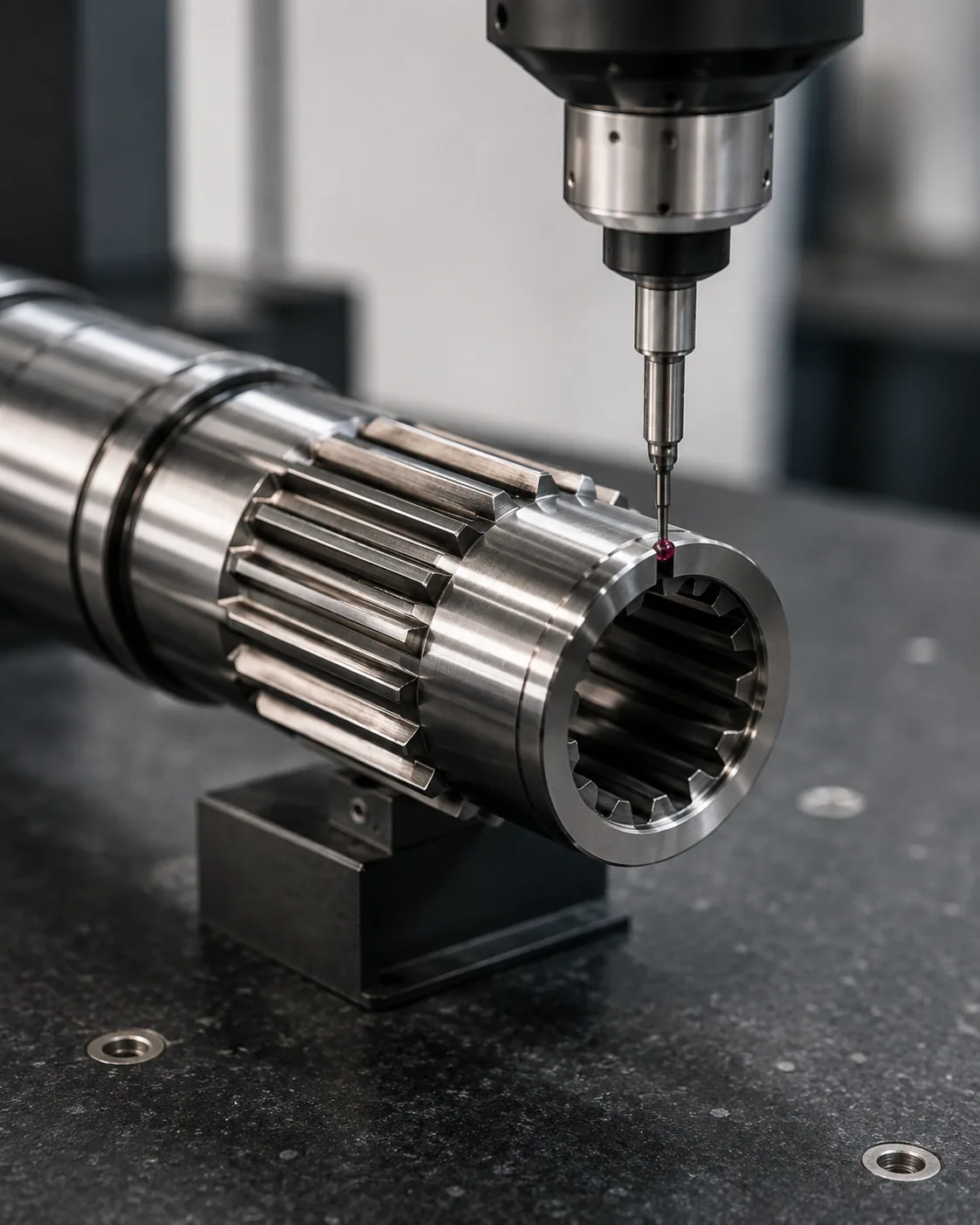
Pemeriksaan Spline Eksternal yang Sesuai
Pemeriksaan Spline Eksternal yang Sesuai Hal ini memengaruhi area kontak, rasa perakitan, dan distribusi beban. Keterlibatan efektif adalah panjang di mana sisi gigi benar-benar dapat menahan beban; chamfer, relief, dan bagian gigi yang tidak lengkap tidak boleh secara otomatis dihitung sebagai panjang kerja.
Kecocokan harus dievaluasi sebagai sepasang komponen yang saling berpasangan. Ketebalan gigi, lebar ruang, jarak diameter, keselarasan, dan suhu semuanya berkontribusi. Untuk penggantian, periksa kedua bagian karena keausan pada hub dapat membuat poros baru terasa longgar meskipun spline eksternal baru berada dalam toleransi gambarnya. Dalam tinjauan ini, kriteria penerimaan yang berguna adalah kriteria yang dapat ditelusuri ke karakteristik gambar fungsional. Untuk Poros Spline Internal yang Didinginkan dan Ditempa: Apa yang Harus Ditentukan, catat persyaratan yang dihasilkan pada gambar atau spesifikasi pembelian agar tetap konsisten pada pesanan berulang.
Kesalahan umum yang harus dihindari
Kesalahan umum pada poros spline internal yang dikeraskan dan diberi perlakuan temper berasal dari memperlakukan satu nilai nominal seolah-olah nilai tersebut mendefinisikan seluruh antarmuka. Sudut tekanan yang hilang, datum yang tidak jelas, dimensi keausan yang disalin, lokasi kekerasan yang tidak ditentukan, dan metode inspeksi yang tidak sesuai dapat menghasilkan komponen yang tampak benar di atas kertas tetapi tidak dapat dirakit secara konsisten.
Tinjauan yang lebih baik dimulai dengan pasangan yang saling berpasangan, mengidentifikasi jalur beban dan fitur penempatan, kemudian menghubungkan geometri, kondisi material, dan inspeksi dengan fungsi-fungsi tersebut. Tutup pertanyaan yang belum terjawab pada gambar sebelum produksi dan pertahankan interpretasi yang disepakati dengan revisi untuk pesanan berulang. Untuk pekerjaan berulang, pertahankan datum dan dasar pengukuran yang sama kecuali jika persyaratan perakitan berubah. Saat meninjau poros spline internal yang dikeraskan dan diberi perlakuan temper, tinjau kembali poin ini setiap kali komponen yang berpasangan, kondisi material, atau tugas pengoperasian berubah.
Ringkasan keputusan
| Area pengambilan keputusan | Apa yang perlu dikonfirmasi | Mengapa ini penting |
|---|---|---|
| Geometri perkawinan | Sistem gigi, diameter, keterlibatan, dan kesesuaian. | Kompatibilitas kontrol dan kontak samping |
| Lokasi | Datum, jurnal, bahu, dan runout | Mengontrol keselarasan dalam perakitan |
| Kondisi material | Kelas, perlakuan panas, kekerasan, dan penyelesaian | Menentukan kondisi mekanis dan keausan akhir. |
| Tugas | Torsi, kecepatan, guncangan, gerakan, dan lingkungan | Menghubungkan definisi komponen dengan kondisi pengoperasian. |
| Inspeksi | Karakteristik terkontrol dan metode pengukuran | Menjaga konsistensi penerimaan antara pemasok dan pembeli. |
Daftar periksa spesifikasi
- Komponen pasangan dan orientasi gigi eksternal/internal
- Modul atau sistem pitch, jumlah gigi, sudut tekanan, dan diameter mayor/minor.
- Keterlibatan yang efektif, kesesuaian atau dasar toleransi, dan pergerakan aksial jika diperlukan.
- Material, perlakuan panas, lokasi kekerasan, dan lapisan permukaan fungsional.
- Datum, diameter bantalan atau pilot, runout, dan persyaratan lokasi aksial.
- Torsi, kecepatan, beban kejut atau beban balik, pelumasan, dan lingkungan pengoperasian.
- Jumlah, persyaratan artikel pertama, dan dokumentasi inspeksi yang disepakati.
Gunakan rangkaian produk poros spline untuk membandingkan konfigurasi yang tersedia dan Daftar periksa gambar RFQ Untuk menyiapkan penyelidikan lengkap. Ketika tugas atau anggota pasangan berubah, tinjau kembali poin ini alih-alih melanjutkan asumsi sebelumnya. Saat meninjau poros spline internal yang dipadamkan dan ditempa, tinjau kembali poin ini setiap kali komponen pasangan, kondisi material, atau tugas pengoperasian berubah.
Lembar kerja teknik untuk poros spline internal yang dipadamkan dan ditempa
Gunakan lembar kerja ini untuk beralih Poros Spline Internal yang Didinginkan dan Ditempa: Apa yang Harus Ditentukan menjadi keputusan yang dapat ditunjukkan pada gambar, diperiksa selama penawaran harga, dan diverifikasi pada artikel pertama. Mulailah dengan Tujuan dari Kondisi Pendinginan dan Tempering Dan Akses Spline Internal, karena kedua hal tersebut biasanya menentukan geometri penyambungan atau kondisi material yang harus didukung oleh proses selanjutnya. Kemudian tinjau Distorsi Lubang, Penyelesaian Permukaan Setelah Perlakuan Panas Dan Interpretasi Kekerasan Hb terhadap susunan sebenarnya daripada memperlakukannya sebagai nilai katalog independen.
Untuk keputusan mengenai material atau perlakuan panas, catat ukuran penampang, masalah kontak atau keausan, beban benturan atau beban balik, dan fitur-fitur yang harus tetap terkontrol dimensinya setelah pemrosesan termal. Tingkat material, jalur pengerasan, dan urutan pemesinan akhir harus dipertimbangkan bersama. Kekerasan target tanpa lokasi pengukuran tidak sepenuhnya mendefinisikan persyaratan, dan permukaan yang keras saja tidak mendefinisikan kedalaman lapisan, kondisi inti, atau kelurusan. Untuk Poros Spline Internal yang Didinginkan dan Ditempa: Apa yang Harus Ditentukan, catat persyaratan yang dihasilkan pada gambar atau spesifikasi pembelian agar tetap konsisten pada pesanan berulang.
Kaitkan tujuan kondisi pendinginan dan temper serta akses spline internal dengan gambar akhir. Tunjukkan di mana kekerasan diterapkan, jurnal atau permukaan gigi mana yang memerlukan penyelesaian akhir, dan datum mana yang digunakan setelah perlakuan panas. Jika kedalaman lapisan atau kekerasan inti sangat penting, sebutkan secara eksplisit. Jika distorsi dapat memengaruhi penyelesaian permukaan setelah perlakuan panas, biarkan jalur manufaktur cukup fleksibel untuk mencakup pelurusan, toleransi stok, atau penyelesaian keras bila diperlukan.
Urutan tinjauan gambar
Sebelum meminta produksi, tinjau gambar dengan urutan yang sama seperti pengerjaan perakitan: sistem gigi yang saling berpasangan, keterlibatan yang efektif, titik acuan, jurnal atau bahu yang berdekatan, material dan perlakuan panas, lapisan akhir fungsional, dan metode inspeksi. Untuk poros spline internal yang dipadamkan dan ditempaUrutan tersebut penting karena keputusan selanjutnya, seperti pemilihan proses atau pilihan alat ukur, harus mendukung antarmuka tersebut, bukan mendefinisikannya ulang.
| Item lembar kerja | Pertanyaan untuk dijawab | Keluaran RFQ |
|---|---|---|
| Tujuan dari Kondisi Pendinginan dan Tempering | Fungsi perakitan apa yang dikendalikan oleh fitur ini? | Dimensi, toleransi, atau referensi pemasangan. |
| Akses Spline Internal | Kondisi akhir apa yang harus dicapai? | Keterangan material / perlakuan panas / finishing |
| Distorsi Lubang | Bagaimana karakteristik tersebut akan diverifikasi? | Metode inspeksi atau catatan pelaporan |
| Penyelesaian Permukaan Setelah Perlakuan Panas | Bagaimana tanggapan anggota lawan? | Informasi bagian perkawinan dan keterlibatan |
| Interpretasi Kekerasan Hb | Data mana yang menentukan lokasi fungsional? | Hubungan datum dan runout |
Pengalihan pengadaan sebelum artikel pertama
Paket pembelian yang bermanfaat untuk Poros Spline Internal yang Didinginkan dan Ditempa: Apa yang Harus Ditentukan Berisi gambar terkontrol, kuantitas, material dan kondisi perlakuan panas, informasi antarmuka sambungan, dan karakteristik penerimaan yang perlu dilaporkan. Jika model 3D disediakan, gambar 2D tetap harus memuat toleransi, datum, catatan perlakuan panas, dan persyaratan inspeksi. Identifikasi revisi terkini dalam RFQ agar manufaktur dan inspeksi tidak menggunakan versi yang berbeda.
Jika suatu karakteristik belum ditentukan, tandai untuk klarifikasi teknis daripada memasukkan nilai yang mudah. Untuk poros spline internal yang dikeraskan dan diberi perlakuan temper, hal-hal umum yang perlu dipertimbangkan adalah keterlibatan, kesesuaian, lokasi kekerasan, penyimpangan ke jurnal yang berdekatan, akses fitur internal, atau kondisi komponen pasangan yang aus. Menyelesaikan poin-poin tersebut sebelum pembuatan prototipe pertama mengurangi pengerjaan ulang yang tidak perlu dan membuat pesanan berulang selanjutnya lebih mudah dikendalikan.
Daftar periksa pra-rilis
- Konfirmasikan tujuan kondisi pendinginan dan penempaan terhadap komponen pasangannya yang sebenarnya.
- Konfirmasikan akses spline internal pada kondisi selesai.
- Jelaskan bagaimana distorsi lubang bor akan diperiksa.
- Periksa hasil akhir permukaan setelah perlakuan panas di bawah kondisi perakitan yang dimaksud.
- Kaitkan interpretasi kekerasan hb dengan struktur data fungsional.
- Sebutkan jumlah, tingkat revisi, dan persyaratan dokumentasi artikel pertama.
- Catat perubahan pada tugas, pelumasan, atau perangkat keras yang saling berhubungan untuk pesanan berulang.
Pertanyaan yang sering diajukan
Apa yang perlu saya konfirmasi mengenai tujuan dari kondisi pendinginan dan penempaan untuk poros spline internal yang didinginkan dan ditempa?
Pertama-tama, kaitkan tujuan kondisi pendinginan dan penempaan dengan komponen pasangannya dan fungsi perakitan. Cantumkan persyaratan terukur pada gambar terkontrol, dan sertakan anggota yang berlawanan ketika kompatibilitas bergantung pada kedua bagian. Untuk Poros Spline Internal yang Didinginkan dan Ditempa: Apa yang Harus Ditentukan, ini mencegah label nominal menggantikan geometri yang sebenarnya mengontrol kesesuaian dan transfer torsi.
Apa yang perlu saya konfirmasi mengenai akses spline internal untuk poros spline internal yang dikeraskan dan diberi perlakuan temper?
Konfirmasikan akses spline internal pada kondisi akhir, termasuk setiap material, perlakuan panas, permukaan, atau kondisi dimensi yang dapat berubah setelah pemrosesan. Jika persyaratan bergantung pada lokasi atau datum, tunjukkan secara eksplisit agar produksi dan inspeksi menggunakan referensi yang sama.
Apa yang perlu saya konfirmasi mengenai distorsi lubang pada poros spline internal yang dipadamkan dan diberi perlakuan temper?
Pilih metode inspeksi yang mengukur karakteristik yang disebutkan pada gambar. Pengukuran fungsional, pengukuran spline analitik, pemeriksaan CMM, inspeksi runout, pengukuran kekasaran, dan pengujian kekerasan menjawab pertanyaan yang berbeda. Nyatakan hasil mana yang diperlukan untuk penerimaan daripada meminta laporan inspeksi umum. Untuk Poros Spline Internal yang Didinginkan dan Ditempa: Apa yang Harus Ditentukan, catat persyaratan yang dihasilkan pada gambar atau spesifikasi pembelian agar tetap konsisten pada pesanan berulang.
Apa yang perlu saya pastikan mengenai hasil akhir permukaan setelah perlakuan panas untuk poros spline internal yang dipadamkan dan ditempa?
Periksa hasil akhir permukaan setelah perlakuan panas dengan bagian pasangan sebenarnya dan kondisi perakitan yang dimaksud. Keterlibatan yang efektif, celah, pergerakan aksial, suhu, dan keausan pada hub pengganti semuanya dapat memengaruhi bagaimana sambungan tersebut berperilaku. Poros baru tidak boleh diterima atau ditolak hanya berdasarkan perasaan saja ketika persyaratan kecocokan yang terukur tersedia.
Apa yang perlu saya konfirmasi mengenai interpretasi kekerasan HB untuk poros spline internal yang dipadamkan dan diberi perlakuan temper?
Kaitkan interpretasi kekerasan hb dengan fitur-fitur yang menunjukkan lokasi rotasi pada rakitan. Gambar harus memperjelas referensi datum dan setiap penyimpangan atau hubungan posisi. Jika perlakuan panas atau pemesinan akhir dapat menggeser fitur tersebut, periksa hubungannya pada tahap yang mewakili bagian yang sudah jadi.
Dari pengambilan keputusan teknik hingga pengendalian produksi
Setelah antarmuka disepakati, terjemahkan setiap keputusan fungsional ke dalam karakteristik gambar yang dapat diproduksi dan diperiksa. Hindari hanya mencantumkan hubungan kunci dalam catatan email. Dimensi, datum, kondisi perlakuan panas, dan persyaratan penerimaan harus dikontrol revisinya sehingga tim produksi dan tim inspeksi bekerja dengan definisi yang sama. Untuk pekerjaan berulang, pertahankan datum dan dasar pengukuran yang sama kecuali jika persyaratan perakitan berubah. Saat meninjau poros spline internal yang dipadamkan dan ditempa, tinjau kembali poin ini setiap kali komponen pasangannya, kondisi material, atau tugas pengoperasian berubah.
Untuk artikel pertama, prioritaskan karakteristik yang membuktikan kompatibilitas perakitan: geometri gigi, kesesuaian pemasangan, hubungan dengan jurnal atau bahu penempatan, kondisi perlakuan panas, dan setiap penyimpangan kritis. Catat metode pengukuran bersama dengan hasilnya. Pada pesanan berulang, menggunakan pengaturan datum dan pendekatan pengukuran yang sama memudahkan pengenalan perubahan tren dan mengurangi perselisihan yang disebabkan oleh interpretasi inspeksi yang berbeda. Ketika tugas atau anggota pasangan berubah, tinjau kembali poin ini alih-alih melanjutkan asumsi sebelumnya. Untuk Poros Spline Internal yang Didinginkan dan Ditempa: Apa yang Harus Ditentukan, terapkan pemeriksaan ini pada antarmuka poros spline internal yang didinginkan dan ditempa yang ditunjukkan pada gambar saat ini.
Ketika tugas pengoperasian berubah, buka kembali tinjauan teknik alih-alih menganggap spesifikasi lama tetap sesuai. Torsi yang lebih tinggi, peningkatan guncangan, pembalikan yang lebih sering, pelumasan yang berbeda, atau komponen pasangan baru dapat mengubah kontak dan keausan meskipun ukuran spline nominal tetap sama. Gambar harus berkembang sesuai dengan persyaratan perakitan aktual. Untuk topik ini, hubungkan keputusan tersebut dengan komponen pasangan dan revisi gambar yang digunakan untuk RFQ. Untuk Poros Spline Internal yang Didinginkan dan Ditempa: Apa yang Harus Ditentukan, catat persyaratan yang dihasilkan pada gambar atau spesifikasi pembelian sehingga tetap konsisten pada pesanan berulang.
Siapkan RFQ (Permintaan Penawaran).
- Gambar 2D terkini dan revisi
- Komponen pasangan dan definisi spline
- Bahan, perlakuan panas, dan lapisan fungsional
- Torsi, kecepatan, beban kerja, dan lingkungan.
- Jumlah dan dokumen inspeksi yang dibutuhkan
Permintaan informasi yang lengkap menggabungkan gambar, antarmuka pasangan, kondisi material, tugas, kuantitas, dan harapan inspeksi. Ketika masukan ini didefinisikan sejak awal, pemasok dapat merencanakan perkakas, perlakuan panas, penyelesaian akhir, dan pengukuran berdasarkan persyaratan fungsional yang sama, mengurangi siklus klarifikasi sebelum artikel pertama. Dalam tinjauan ini, kriteria penerimaan yang berguna adalah kriteria yang dapat ditelusuri ke karakteristik gambar fungsional. Saat meninjau poros spline internal yang dipadamkan dan ditempa, tinjau kembali poin ini setiap kali komponen pasangan, kondisi material, atau tugas pengoperasian berubah.
Ubah panduan ini menjadi Permintaan Penawaran (RFQ).
Kirim gambar terkontrol, antarmuka pemasangan, kondisi material, dan informasi tugas untuk tinjauan teknis.
Permintaan Penawaran